
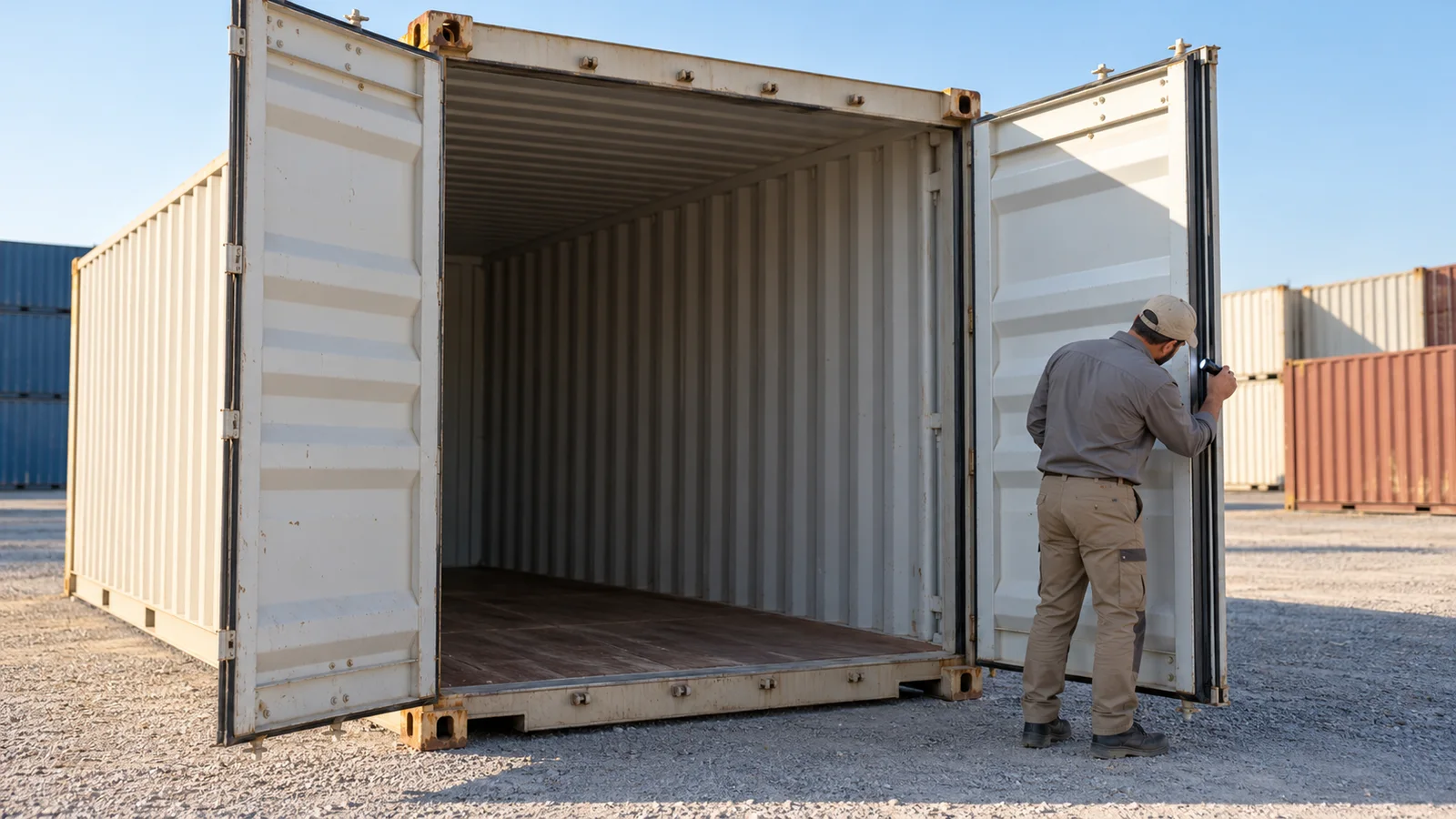

Buying a used shipping container can be a sensible way to secure storage or support a project in Dubai, but the label “used” does not tell you enough on its own. Containers work hard: they are lifted, stacked, transported and exposed to weather. A few dents, faded paint or light surface rust may be acceptable for a ground-storage unit. A damaged roof, distorted frame, poor door seal or soft floor is a different conversation.
A used shipping container inspection in Dubai should begin with the job you need the unit to do. A contractor storing tools may accept cosmetic wear that a business storing finished stock would not. A unit intended for international transport has different requirements from one that will remain on a prepared site. The goal is not to expect a used container to look new. It is to understand its condition, confirm what has been quoted, and decide whether that condition is suitable for the intended use.
This buyer checklist focuses on practical observations you can make in person, through a video call or from a photo set. It does not replace a formal survey, compliance check or site-specific engineering advice. If your project has regulated cargo, conversion work, structural alterations or export requirements, bring in the appropriate qualified professional early.
Start With the Intended Use, Not the Lowest Price
Before looking at panels or door handles, write down what the container will be used for. That simple step helps you judge which observations matter most. A container for packaged construction materials has a different tolerance for appearance than one for retail inventory, sensitive equipment or a planned conversion.
- Ground storage: Prioritise weather protection, sound doors, a usable floor and a condition appropriate for the goods.
- Frequent access: Give extra attention to door operation, lockability, threshold condition and the space required around the doors.
- Appearance-sensitive use: A cleaner interior and exterior may be more important than it is for basic site storage.
- Planned modification: Discuss the work with a qualified specialist before buying. The container’s condition and structural plan should be compatible.
- International transport: Confirm the relevant shipping, safety-approval and carrier requirements; do not assume that a container suitable for static storage is ready for export.
That last distinction is important. The International Maritime Organization explains that the International Convention for Safe Containers provides a safety-approval framework for containers used in international transport. A plate or number should not be treated as a promise that a particular container will meet the requirements of your intended voyage. Check the applicable transport requirements with the carrier, freight professional or competent authority.
Know What a Used Container Can Look Like
A useful inspection separates normal service wear from issues that can affect weather resistance, access or safe handling. Cosmetic marks might include scuffed paint, minor dents in a wall panel, faded markings or superficial corrosion. These can be reasonable for a used unit when they do not compromise the shell, frame or doors.
More serious signs deserve a closer look: holes, torn steel, deep roof dents that may hold water, corrosion that has gone through the steel, bent corner fittings, a twisted door frame, soft flooring, strong unexplained odours, or doors that will not operate and seal properly. Do not try to diagnose every issue from a distant photograph. Ask for clear evidence, record any agreed condition, and decide whether a repair, a different unit or a different condition category is more sensible for your use.
If you are still deciding between conditions, compare the roles of used shipping containers and new or one-trip containers. A used unit may suit a practical storage job, while a cleaner one-trip unit may be worth discussing where appearance, interior condition or a particular project outcome matters more.
Bring a Simple Inspection Kit
You do not need specialist equipment for an initial assessment, but a small kit makes the process more systematic. Bring a torch, phone or camera, gloves, notebook and footwear suitable for the site. If you need to inspect a roof or underframe, do not climb on a container or go beneath a raised unit without the supplier’s safe access arrangements. Ask for a safe view, recent photograph or video instead.
Record the unit identification shown to you, the date of inspection and photographs of every point you query. That information is useful when comparing two quotations or confirming what was agreed before delivery. It also avoids relying on memory after seeing several similar containers.
Walk Around the Exterior First
Check the Roof Line, Corners and Rails
Stand back and look along the roof line and the length of each side. You are looking for obvious distortion, holes, severe corrosion, torn panels and repairs that need an explanation. The roof deserves particular attention because water can collect in deeper dents. You may not be able to view it directly from the ground, so ask for an image taken safely from above rather than taking an unnecessary risk.
Look at the corner castings, corner posts and lower rails too. These are not just cosmetic parts; they relate to lifting, positioning and the overall shape of the unit. If a container sits visibly out of level or a corner appears heavily damaged, pause before assuming the issue is minor. Delivery and placement need to be discussed with the actual site conditions in mind.
Distinguish Surface Rust From Rust-Through
Surface rust and paint wear can be expected on a used container. What needs investigation is corrosion that has created a hole, weakened a rail, opened a seam or appears concentrated where water may have been sitting. Do not rely on a broad description such as “good condition.” Ask where any visible corrosion is located and whether it affects weather protection, the frame or the intended use.
For storage, the practical question is whether the container will keep the particular goods protected in the planned site environment. For any transport or structural use, the appropriate standard and inspection requirements may be stricter. Those are separate decisions.
Operate Both Doors and Inspect the Seals
Doors are one of the fastest ways to learn whether a used container is a convenient storage unit or a recurring frustration. Open both doors fully, then close and latch them using the normal handles and locking bars. They should operate in a way that is appropriate for the unit without forcing, unsafe leverage or obvious misalignment. A door that binds, drags or will not line up can point to an issue with the door itself, its hardware or the frame.
Inspect the rubber gaskets around the door perimeter. Look for sections that are missing, split, hardened, flattened or pulled away. Door seals help keep wind-driven rain and dust out when the doors are shut. A worn gasket may be repairable, but it is still something to document before agreeing to the purchase.

Inspect the Interior, Floor and Odour
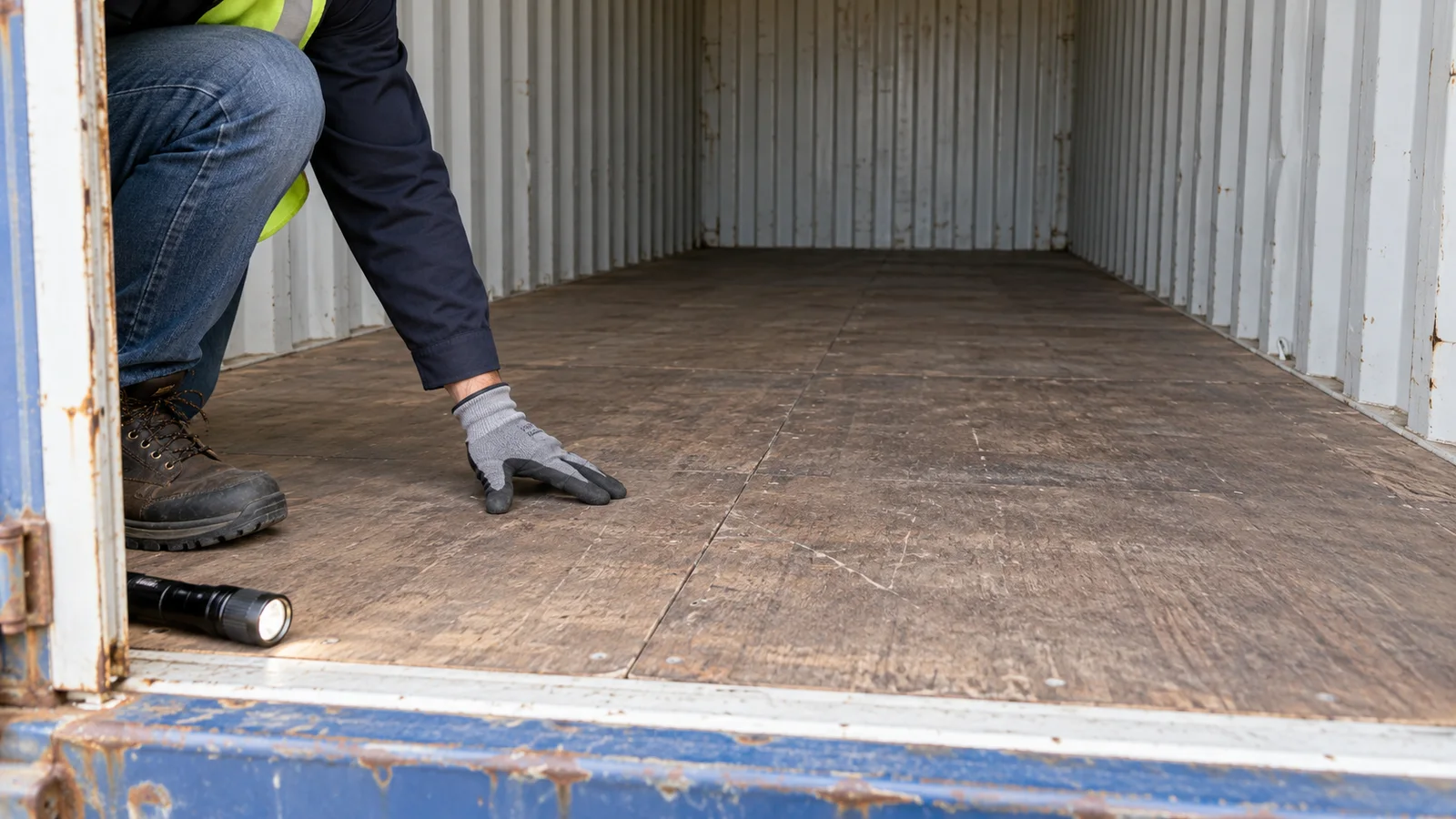
Once inside, give your eyes a moment to adjust. Look at the roof, corners, wall seams and door end for signs of daylight, water staining or recent patching. A small torch can make an interior inspection easier, but it does not turn a basic buyer check into a professional certification. If you see a concern, photograph it and ask what it means for the quoted condition.
Walk the entire floor carefully. Check for soft areas, broken boards, major delamination, exposed fasteners, staining or a surface that would not suit what you intend to store. A used floor can show marks from previous service, yet it still needs to be solid and usable for the load and traffic you expect. Strong persistent smells, unexplained residue or heavy staining should also be discussed before storing goods that are sensitive to contamination or odour.
Ask for Evidence When You Cannot Inspect in Person
Remote buying is common, especially when delivery is being coordinated to a project site. A listing photograph alone is not enough to compare condition. Ask for a current, clear set of images or a video that shows the exact unit being discussed where possible: both door faces, gaskets, the full interior, the floor, all exterior sides, corner areas and roof condition from a safe vantage point. Ask which observations relate to the specific unit and which are merely typical examples.
Keep the questions practical:
- Is this the actual unit proposed, or a representative image?
- What is the stated condition category, and what does it cover?
- Are any repairs, cleaning or paint work included in the quotation?
- Can the doors be shown opening, closing and latching on video?
- Are there known floor, roof, seal or odour concerns that matter for the stated use?
- What should be checked again at delivery?
This approach is useful because it connects the quotation to a decision instead of forcing you to make assumptions. It is also more realistic than expecting every used container to be identical.
Check the Unit Again at Delivery
A pre-purchase review should be followed by a quick delivery-day check before the vehicle leaves, where safe and practical. Compare the delivered unit with the agreed size, door arrangement and visible condition. Look at the exterior, open the doors, check that the unit is placed in the agreed orientation and make sure access has not been blocked by the final position.
Preparation matters as much as the container itself. Review the route, gate width, overhead clearance, placement point and ground conditions before the vehicle is dispatched. TAT’s shipping container delivery guide for Dubai explains the kind of access and placement details that should be settled in advance. A suitable unit is less useful if it arrives at a site where it cannot be positioned safely or opened as intended.
Choose the Right Size Before You Inspect
Inspection is easier when you already know the general size required. A 20ft shipping container can suit projects with limited storage needs or tighter site access. A 40ft shipping container gives more room for stock, but requires a delivery and placement plan appropriate for the longer footprint.
Use the shipping container sizes guide for the UAE and the 20ft vs 40ft comparison to narrow the decision before requesting a quote. Choosing a size based only on an apparent bargain can create problems with access, stock rotation and the usable space you actually need.
When a Used Container May Not Be the Best Fit
Used containers are practical products, but they are not the default answer to every requirement. You may want to explore a new or one-trip option if interior appearance, a cleaner surface, a particular finish or a conversion plan is central to the project. You may need a specialist solution if stored goods have defined temperature or humidity conditions; a standard dry container is not automatically climate controlled. In that situation, review the different role of a reefer container and obtain product-specific guidance before choosing equipment.
For a used unit, ask for the condition that suits the job rather than searching for a vague “best” container. A clear brief leads to a more useful conversation and fewer surprises after delivery.
A Quick Used-Container Buyer Checklist
- Define what you will store and the condition that use requires.
- Confirm the unit size, delivery location and site access before ordering.
- Record the quoted unit details and stated condition.
- Inspect or request current evidence of the roof, walls, rails and corner areas.
- Open, close and latch both doors; inspect gaskets and locking hardware.
- Check the interior for daylight, staining, odour and obvious damage.
- Walk the full floor and note soft areas, major damage or residue concerns.
- Document any agreed repair, cleaning or delivery-day check.
- Inspect safely again after placement, before the delivery vehicle leaves where practical.
When you are ready to discuss a unit, tell TAT Containers the intended use, preferred size, delivery location, access conditions and whether the interior condition is especially important. That gives the team the context to discuss a suitable shipping container and a practical delivery plan for your UAE project.
Frequently Asked Questions
What should I check first on a used shipping container?
Start with the intended use, then inspect the roof line, walls, corners, doors, gaskets, interior and floor. Record the stated condition and compare the actual unit or current evidence with what was quoted.
Are dents and surface rust normal on a used container?
Some cosmetic dents, paint wear and surface rust can be normal on a used container. Holes, torn steel, corrosion through the shell, damaged corner areas, poor door sealing or a soft floor need closer assessment for the intended use.
Can I inspect a container remotely before delivery?
You can ask for current photos or video of the actual unit where possible, including both doors, gaskets, the floor, interior, exterior sides and roof condition from a safe vantage point. Confirm what evidence relates to the quoted unit.
Does a CSC plate mean a used container is ready for export?
Not by itself. The International Convention for Safe Containers provides a safety-approval framework for international transport, but the requirements for a particular shipment must be confirmed with the carrier, freight professional or competent authority.
What should I check when the container is delivered?
Compare the delivered unit with the agreed size, door arrangement and visible condition. Check that it is placed in the agreed orientation, that doors can be opened safely, and that access or placement issues are raised promptly.