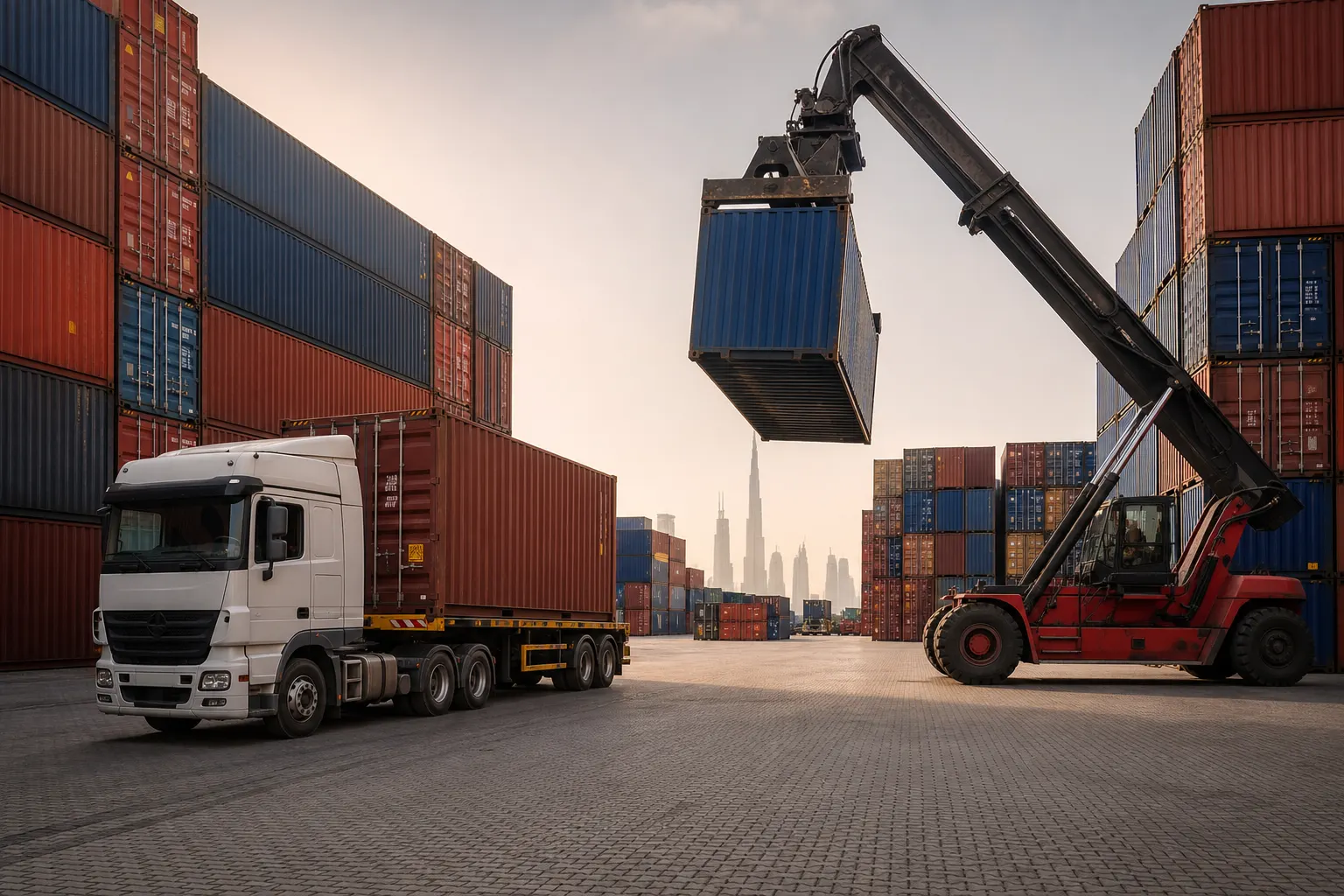
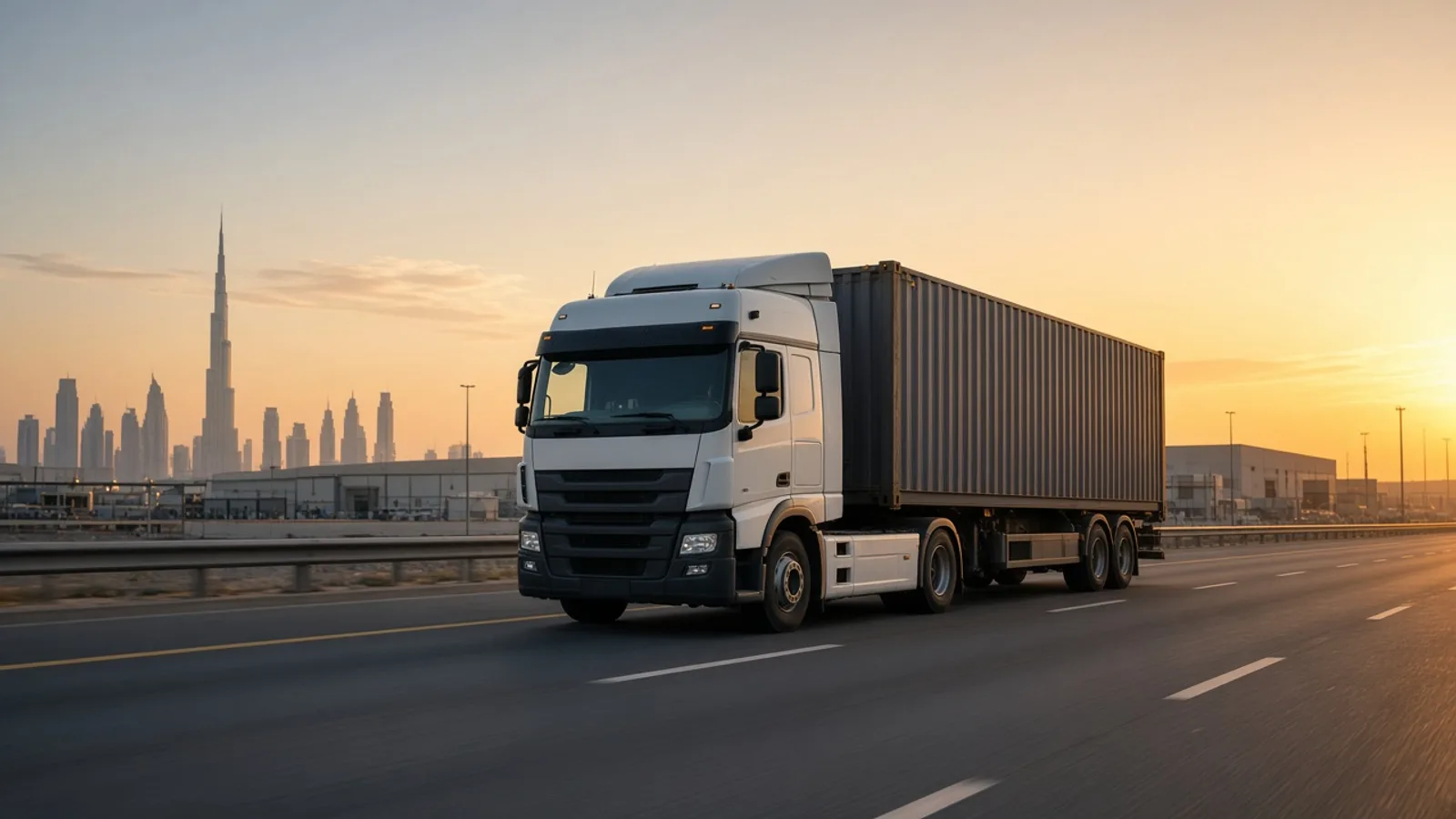

Shipping container delivery Dubai projects depend on accurate access information and a prepared placement area. The container may be suitable and the address may be correct, but delivery can still fail if the truck cannot turn, lifting equipment cannot reach, or overhead services block the operation. Early planning protects the site, equipment and people involved.
For smooth shipping container delivery Dubai coordination, share measurements and clear site photos before transport is booked.
How container delivery is usually planned
The delivery method depends on container size and weight, site access, lifting distance and available working room. A transport provider may use a truck with integrated lifting equipment or a separate crane arrangement. The appropriate method must be selected by competent parties using actual site and load information.
Before confirming a booking, the supplier or transporter will need the container type, delivery address, final orientation and access details. Modified, refrigerated or fitted containers may have different weights and external projections from standard dry units.
A quotation should state the expected transport and offloading scope. Clarify whether waiting time, permits, traffic management, additional lifting equipment or failed delivery costs are treated separately.
Shipping container delivery Dubai access checklist
Measure the route from the public road to the exact placement point. Do not estimate from memory. A wide gate is not enough if the truck cannot align with it or make the preceding turn.
- Gate width and height: Measure the narrowest clear opening.
- Road width: Include parked vehicles, barriers and kerbs.
- Turning space: Check corners inside and outside the property.
- Overhead clearance: Look for cables, branches, signs, roofs and lighting.
- Ground condition: Identify soft sand, slopes, trenches, covers and recently filled areas.
- Lifting zone: Keep people, vehicles and equipment away from the working area.
- Final orientation: Mark where the cargo doors and machinery end should face.
Share photos in sequence, beginning at the road and continuing to the placement point. A short video can show corners and gradients. Include a marked site plan when access is complex.
Differences between 20ft and 40ft delivery
A 20ft container has a shorter footprint and can be easier to position on constrained sites, but it still needs adequate truck and lifting clearance. A loaded or heavily fitted 20ft unit can be dense, so weight remains important.
A 40ft container requires more road length, turning area and a longer prepared base. The placement method and lifting radius can change the equipment needed. A high cube container adds height, which makes overhead checks especially important.
Provide the actual unit specification if it has canopies, stairs, air-conditioning equipment, refrigeration machinery or signs. Removable projections may need to travel separately and be installed after placement.
Preparing a firm and level base
The base must support the container and its intended contents. Containers are designed to transfer loads through their corner castings, so support points should be planned accordingly by a competent person. The correct foundation depends on soil, loading, duration and local conditions.
An uneven base can twist the frame, make doors difficult to operate and damage conversion finishes. Soft ground may settle after delivery. Prepare the area before the truck arrives and keep it free of waste, loose material and standing water.
Plan drainage so water does not collect beneath or around the unit. Maintain suitable clearance from boundaries, structures and services. If the container will be occupied or connected to utilities, coordinate foundations with steps, ramps, electrical entries, water and drainage.
What happens on delivery day
Confirm the site contact and delivery window in advance. The site contact should understand the agreed route and final position and have authority to coordinate access. Gates should be open, parked vehicles moved and the working zone kept clear.
On arrival, the driver or lifting team may reassess conditions. If the ground, clearance or access is unsafe, they may be unable to proceed. Site changes since the quotation, such as scaffolding, excavations or newly parked machinery, should be reported before dispatch.
Only the lifting team should control the offloading operation. Other workers and visitors must stay outside the exclusion zone. Never stand beneath a suspended container or between the unit and a fixed structure.
After placement, check that the container sits evenly and the doors operate correctly. Confirm the orientation before the lifting equipment leaves. Inspect for visible delivery damage and record any concern promptly.
Road access, communities and permits
Dubai includes industrial areas, free zones, construction projects and managed communities with different access controls. Some sites require security passes, scheduled entry, road permissions, traffic management or approval for lifting activity. The buyer should confirm these requirements with the landowner, developer and relevant authority.
Deliveries connected with customs-controlled cargo or port activity need separate procedural checks. Refer to official guidance from Dubai Customs and factual port information from DP World Jebel Ali Port. Container supply and site delivery do not automatically include customs clearance or port handling.
Delivery for fitted and specialist containers
An office container may include windows, wall finishes, air conditioning and electrical equipment. A cafe container may include counters, hatches, kitchen equipment and external branding. Secure internal items and protect fragile finishes before transport.
A reefer container needs the machinery end positioned for airflow, service and a safe power connection. Delivery crews should be told about specialist equipment and any required orientation. Power should only be connected after the unit is placed and checked by qualified personnel.
Stairs, ramps, decks and canopies are often handled separately because they change transport dimensions or lifting. Agree the installation sequence and site responsibilities before delivery.
Common causes of delivery delays
Incomplete addresses, missing access approval, blocked gates and unprepared foundations are common practical problems. Other risks include incorrect crane reach assumptions, overhead cables, soft ground and a final position that differs from the original brief.
Avoid these issues by appointing one site contact, sharing current photos and confirming all measurements. If the site changes, update the supplier. A small change in placement distance or truck position can materially affect lifting feasibility.
Weather and road conditions can also affect transport. Keep timing flexible where possible and do not schedule dependent trades until the delivery plan is confirmed.
Deliveries outside Dubai
The same principles apply across Abu Dhabi, Sharjah, Ajman, Umm Al Quwain, Ras Al Khaimah and Fujairah, but transport distance, route, permits and local access differ. Remote sites may require more detailed directions, coordinates and ground assessment.
Review TAT Containers’ UAE service locations and provide the full destination when requesting a quotation. Do not assume a Dubai transport rate or lifting arrangement applies elsewhere.
Information needed for an accurate quote
Send the container size and type, empty or loaded status, estimated total weight, collection point if relevant, delivery address and final orientation. Include gate and road measurements, overhead clearance, ground information, placement distance, photos and a site contact.
Mention access hours, security procedures, permits and modifications. Ask what delivery and offloading include, what the site must prepare and how waiting or unsuccessful attendance is handled. Use the TAT Containers contact page to send your delivery brief.
Frequently Asked Questions
How much space does a delivery truck need?
There is no single safe figure. It depends on the vehicle, container, lifting method, approach angle and placement distance. Provide measured access details for assessment.
Can a container be lifted over a wall?
It may be possible with suitable equipment and a verified lifting plan, but wall height, reach, load weight, ground conditions and nearby hazards all matter.
Who prepares the container foundation?
This depends on the contract. Buyers commonly arrange the site base, but responsibilities should be confirmed in writing before delivery.
Can the container arrive with goods inside?
Only if the transport and lifting plan, weight, load restraint and legal requirements allow it. Tell the supplier and transporter in advance, as an empty-container quote may not apply.
What if access is unsafe on delivery day?
The lifting team may stop the operation. Keep the route and working area in the agreed condition and report changes before dispatch to avoid delay and additional cost.