
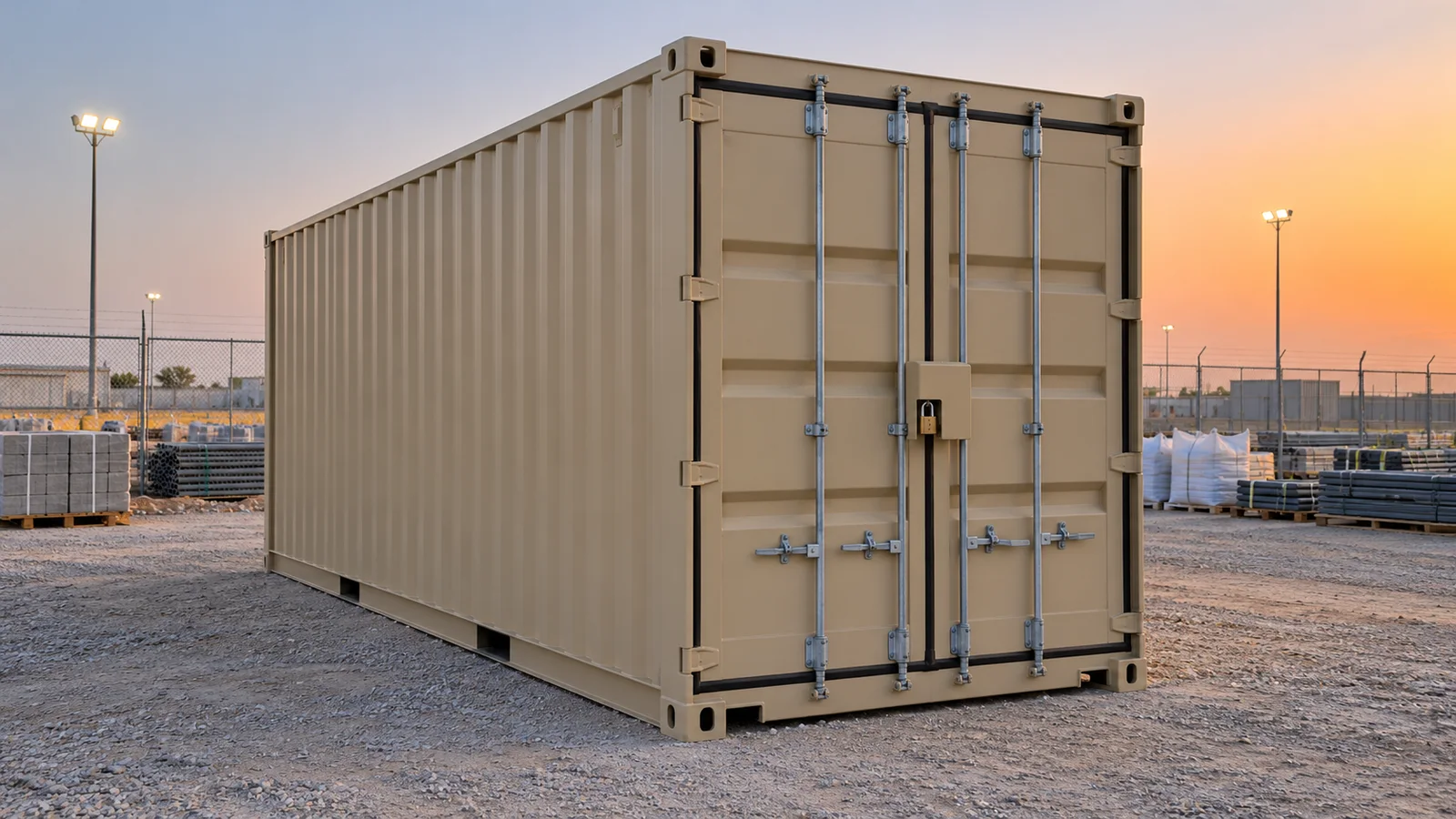

A shipping container gives tools, materials and stock a strong steel enclosure, but the box is only one part of the security plan. Door condition, lock compatibility, site placement, lighting, key control and everyday routines all influence how difficult unauthorised access will be—and how quickly a problem will be noticed.
For businesses researching shipping container security in Dubai, the most useful approach is layered rather than product-led. No padlock, alarm or camera makes a container “theft-proof.” A sensible setup combines a sound container, protected locking hardware, a well-managed site and a response process suited to the value and sensitivity of what is stored.
This guide explains the decisions to make before ordering a container, the door and lock details to review, and the site controls to consider after delivery. It is general planning guidance, not a security certification. High-value stock, hazardous materials, regulated goods or premises subject to specific security rules should be assessed by qualified professionals and the relevant UAE authorities.
Begin With the Goods and the Real Risk
Security planning starts with a simple question: what would happen if someone entered the container, damaged the doors or removed an item? A small set of replaceable site tools creates a different risk from expensive equipment, confidential records, controlled materials or inventory that could stop an operation if it disappeared.
Write down the value of the contents, how easily they can be moved, who needs access, how often the doors will open and how long the container will remain at the site. Also consider when the site is occupied. A lock that is perfectly adequate during a busy working day may not be the whole answer for an isolated unit left unattended overnight.
That short risk review helps avoid two common mistakes: spending heavily on an impressive lock while ignoring an unlit and unmonitored location, or buying electronic equipment that nobody maintains, checks or responds to. The right level of protection should reflect the contents, site, operating hours, insurance conditions and applicable rules.
Choose a Container With Sound Doors and Structure
Security hardware cannot compensate for a door that is badly distorted or a frame that no longer closes correctly. Before buying, inspect the cargo doors, hinges, locking bars, handles, retainers, gasket area and surrounding frame. Both doors should close and latch in a repeatable way appropriate for the unit. If a handle, bar or keeper is damaged, get it assessed before deciding what lock will fit.
The shell matters too. Look for holes, torn steel, severe corrosion, damaged corners and unapproved openings. Cosmetic paint wear is not the same as a breach, but any issue that creates easy tool access or prevents the doors from aligning deserves attention. Our used shipping container inspection checklist covers the roof, floor, seals and frame in more detail.
If appearance, door condition or a clean starting point is particularly important, compare new or one-trip shipping containers with used shipping containers. Condition and security are connected, but they are not identical: a cleaner unit still needs compatible locks and a site plan, while a serviceable used unit can be suitable when its doors and structure match the intended use.
Understand the Door Hardware Before Buying a Lock
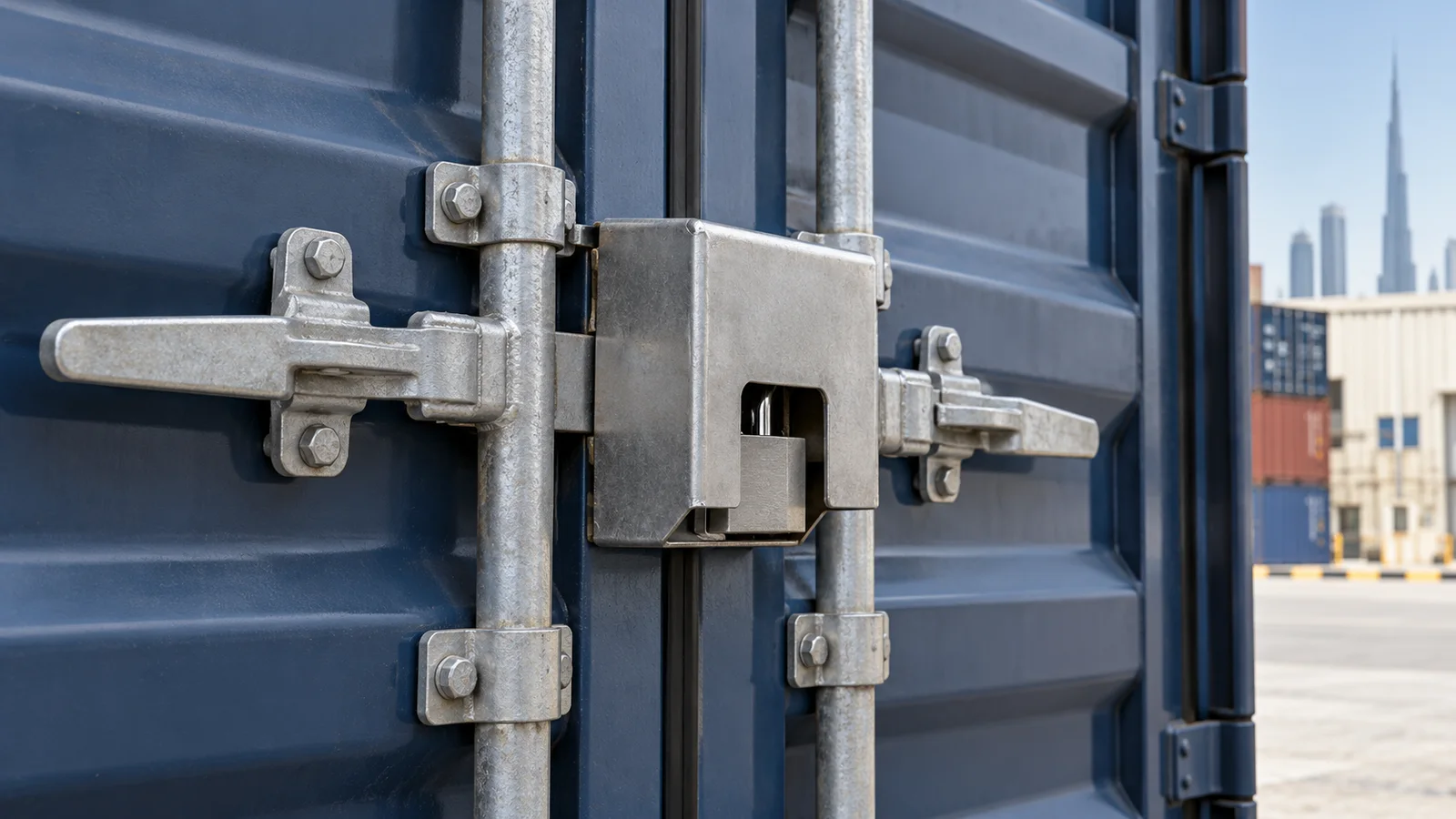
Container cargo doors typically use vertical locking rods, handles and keepers to pull the doors into position. The padlock does not replace those components; it prevents the secured handle or locking point from being released. Because container doors and added security fittings vary, a lock should be selected against the actual clearances and hardware rather than a generic “heavy-duty” label.
Reduce Exposed Access to the Lock
A conventional padlock with a long exposed shackle may offer more room for cutting or leverage. Protected-shackle, concealed-shackle and compatible lockbox arrangements are designed to reduce access around the vulnerable part of the lock. That does not make them impossible to defeat. It increases the time, effort, noise or tool access required compared with an exposed fitting.
A lockbox is a steel enclosure around the padlock area. If one is already fitted, confirm that the lock can be inserted, turned and removed normally without forcing it. If a lockbox or another fitting is to be added, the design, welding and location should be assessed by a competent specialist so the doors operate correctly and the modification does not create another weakness.
Match the Lock to the Environment and Access Routine
Outdoor locks face dust, heat, moisture and repeated handling. Check the manufacturer’s environmental guidance and maintenance instructions for the chosen product. A lock that seizes, collects dirt or cannot be operated reliably will often be left unsecured “for a minute,” turning a hardware problem into a routine problem.
Think about who will hold the keys or codes. Avoid uncontrolled copying, keys left near the container or shared codes that are never changed. Keep an authorised-access list, record handovers, and recover keys or revoke codes promptly when responsibilities change. If emergency access is required, define who can authorise it and how that access is logged.
Shipping Container Security in Dubai Starts With Placement
The delivery position affects security every day after the truck leaves. A hidden container may be convenient for site layout, yet it can also give an intruder privacy. A unit placed where authorised staff or existing surveillance can observe the doors may offer a more useful deterrent. The best location balances visibility with safe truck access, drainage, working space and the operational needs of the site.
Plan the door orientation deliberately. The doors need enough clear space to open safely and should not face an unmanaged public boundary if another workable orientation reduces exposure. At the same time, do not position them so close to a wall or obstruction that staff cannot inspect the hinges, seals and lock. Blocking the door with machinery may also create emergency and operational problems.
Review delivery access before deciding on the security layout. Our Dubai container delivery and placement guide covers vehicle approach, lifting clearance, prepared ground and the final drop position. Security features such as bollards, fencing or lighting should not obstruct the delivery method or trap the container in an unsafe location.
Use Site-Level Layers Around the Container
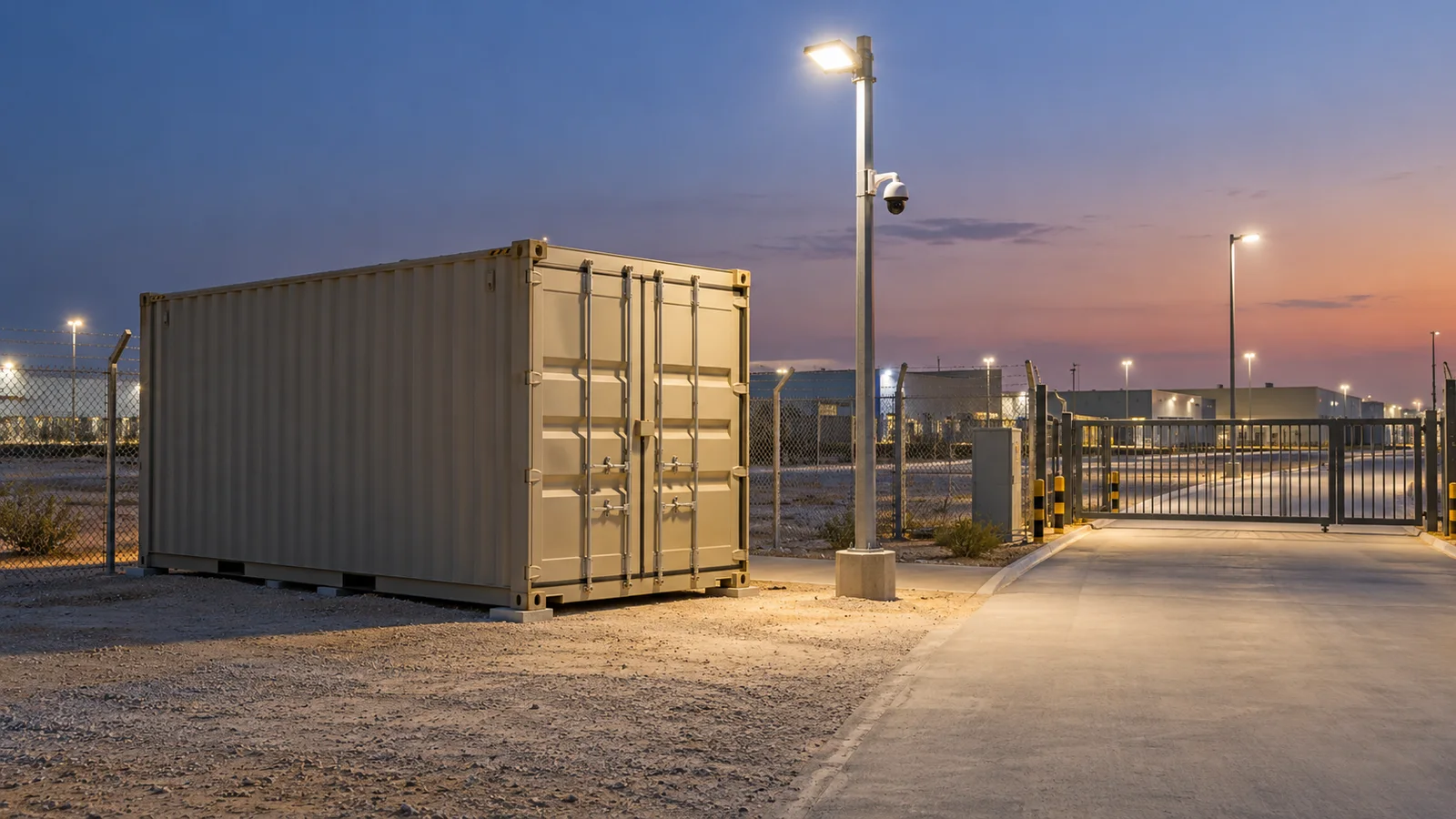
A protected lock is strongest when the surrounding site does not give someone unlimited time to work on it. Depending on the risk and site rules, useful layers may include controlled gates, perimeter fencing, lighting, monitored cameras, alarms, patrols or placing the container within an actively used area. These are site-security decisions, not standard features of a dry shipping container.
Lighting Should Support Observation
Lighting can deter casual interference and help staff or cameras observe the door area, but only when the placement is sensible. Avoid glare that blinds a camera or deep shadows behind the container. Keep fixtures protected from vehicle movements, inspect them regularly and decide who reports a failed light. If lighting is triggered by motion, test the detection area and response rather than assuming the installation works because the lamp turns on once.
Cameras and Alarms Need a Response Plan
A camera can provide visibility or evidence, and an alarm can provide an alert. Neither automatically sends help. Define who monitors the system, who receives an alert outside working hours, how quickly it should be checked and what action is safe. Connectivity, power, storage, privacy, maintenance and false alarms should be discussed with a qualified provider.
Dubai security systems and certain storage operations may be subject to specific requirements. The Security Industry Regulatory Agency is the official source for current Dubai security-system guidance and regulated activity information. Confirm which rules apply to the actual premises and operation rather than assuming a general blog article establishes compliance.
Control Daily Access and Closing Procedures
Many security failures are procedural. The lock is available but not used, the final person leaves one door incompletely latched, keys are passed informally, or valuable items are placed directly inside the doorway where they can be removed quickly. A short closing procedure can prevent these avoidable gaps.
- Confirm that no person remains inside and the door area is clear.
- Close both cargo doors in the correct order for the unit.
- Engage the locking rods and handles fully.
- Fit the approved lock and check that it has latched.
- Remove keys and update any access or handover record.
- Check lighting, cameras or alarms according to the site procedure.
- Report damaged hardware, missing keys or suspicious activity immediately.
Keep high-value portable items away from the doors where practical, and organise the interior so staff can notice missing stock. An inventory does not prevent entry, but it shortens the time between a loss and discovery. For larger operations, use a defined check-in/check-out process rather than relying on memory.
Security Seals Are Not the Same as Locks
A numbered seal can show that a door has been opened or interfered with, which may be useful for transport records or internal control. It is generally a tamper-evidence tool, not a substitute for a suitable physical lock. If a seal is used, record its number, control who issues it and define what staff should do if it is missing, broken or does not match the record.
For containers entering transport networks, carrier, port, customs and cargo-security requirements may apply. Confirm those requirements with the relevant parties. The security plan for a static jobsite container should not be assumed to meet the rules for an international shipment, and vice versa.
Protect the Container Without Creating Safety Problems
Security additions should not make normal work unsafe. Do not create sharp projections at head height, block an emergency route, overload a door, run unprotected cables across vehicle lanes or position barriers where delivery equipment needs to operate. Any electrical installation, welding, alarm work or structural modification should be designed and carried out by suitably qualified people.
Never allow a person to enter a container as part of a security check unless the doors are controlled so they cannot close and trap them. If the container is used as a workplace or fitted room rather than simple storage, different requirements may apply for occupancy, ventilation, access, fire safety and approvals. Review the intended use with the relevant specialists and authorities.
Consider Environmental Protection Alongside Theft Risk
A locked container can still be unsuitable for the goods inside. Heat, humidity, condensation, dust, pests and water entry are separate risks. Use the UAE container condensation guide to plan dry loading, inspection and site drainage. Products with defined temperature or humidity requirements may need a specialist solution rather than a standard dry container.
This distinction also matters for insurance. Ask what the policy requires for locks, site protection, inventories, environmental conditions and evidence after an incident. Do not assume the steel shell or a particular brand of lock guarantees cover. Keep quotations, photographs, unit identification, maintenance records and the security procedure where they can be retrieved if needed.
Review Security After Delivery and After Every Change
On delivery day, confirm the container is the expected size and condition, sits in the agreed orientation and leaves enough room for authorised access. Test the doors and lock arrangement after final placement because an uneven base can affect door alignment. Check that new lighting, fencing or vehicle routes do not create blind areas or obstruct the doors.
Repeat the review whenever the contents become more valuable, the site boundary changes, nearby work removes lighting, access responsibilities change or the container is moved. Maintenance should include the lock, lockbox, handles, hinges, door alignment, lights, cameras and any alarm power or connectivity. A layered system loses value when one neglected component becomes the easy path.
What to Include in a Container Enquiry
When requesting a container for secure site storage, share the intended use, approximate value or sensitivity of the contents, preferred size, condition requirement, delivery location and site-access constraints. State whether you expect to add a lockbox or other modification, but ask a qualified specialist to confirm the design and installation.
You can compare the 20ft container option and 40ft container option before viewing the broader shipping container range. When the project details are ready, contact TAT Containers with the size, condition, quantity, delivery area and intended use so the container and delivery conversation starts with the right context.
Frequently Asked Questions
What is the best way to secure a shipping container in Dubai?
Use layers: start with sound doors and compatible protected locking hardware, then add suitable placement, controlled access, lighting, monitoring, key control and a response procedure based on the contents and site risk. No single product makes a container theft-proof.
Does a shipping container need a lockbox?
A compatible lockbox can reduce exposed access around a padlock and may be useful where the risk justifies it. The design must fit the actual door hardware and allow reliable operation. Have modifications assessed and installed by a competent specialist.
Is CCTV enough to protect a storage container?
No. CCTV can support observation and evidence, but it does not replace a sound container, physical locks, access control or a response plan. Decide who monitors alerts, maintains the system and acts when an event occurs.
Should container doors face a wall for security?
Not automatically. A wall may restrict tool access, but it can also obstruct safe door operation and inspection. Choose an orientation that balances visibility, authorised access, delivery clearance, emergency needs and the site’s security assessment.
Are numbered security seals a replacement for padlocks?
No. A numbered seal can provide evidence that a door has been opened or tampered with, but it is not normally a substitute for appropriate locking hardware. Record seal numbers and define what happens if a seal is broken or mismatched.