
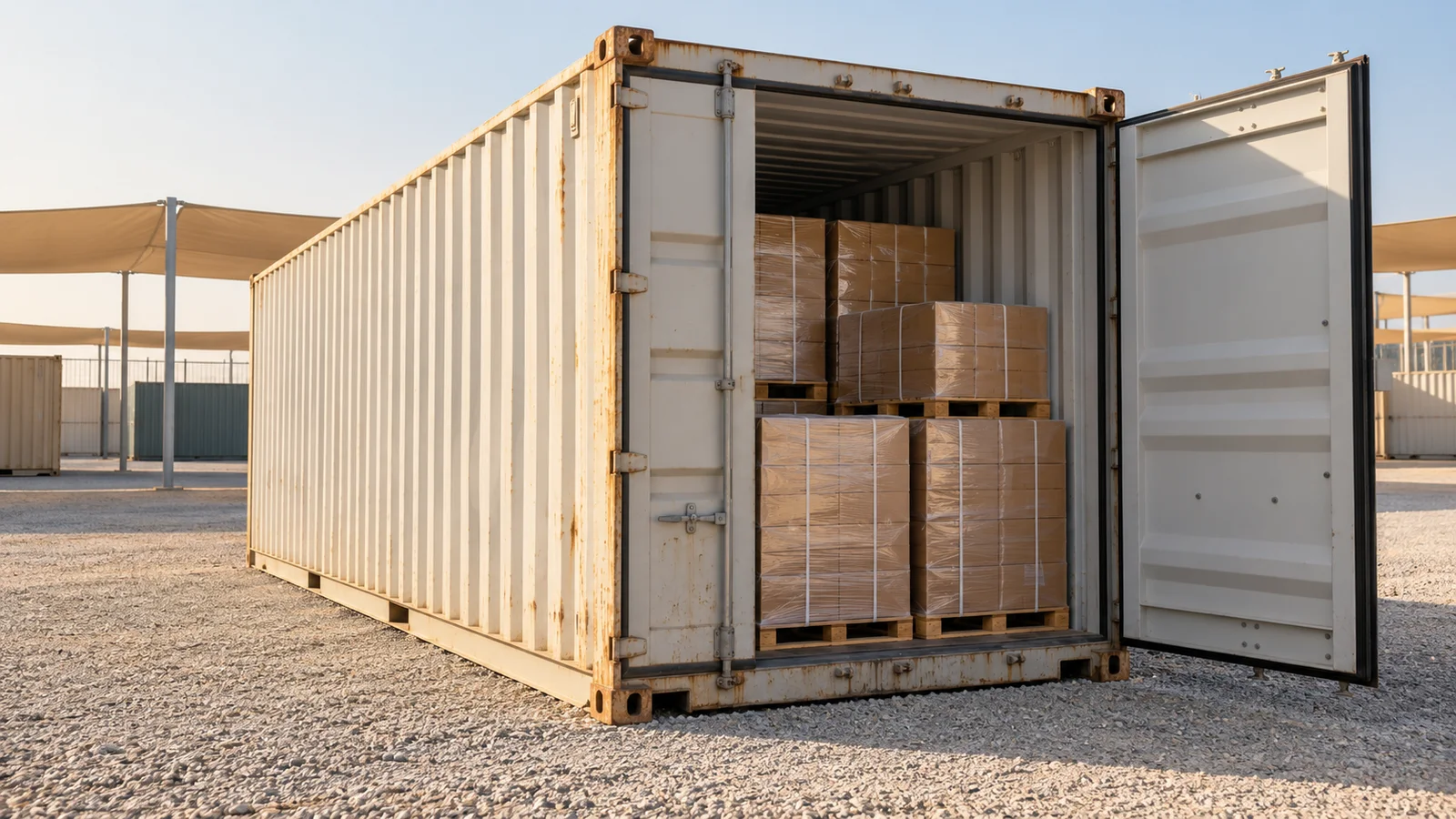

Condensation inside a shipping container is easy to mistake for a leak. Both can leave damp patches, staining or mould on packaging, but they do not have the same cause or the same remedy. For UAE businesses using a container for tools, packaged stock, equipment, documents or project materials, that difference matters. A structurally sound container can still experience moisture problems when warm, humid air, a cool steel surface and moisture already in the load meet at the wrong time.
This guide explains how to think through shipping container condensation in the UAE before goods are loaded. It is not a substitute for a site-specific assessment, product-storage specification or regulatory advice. It is a practical planning framework: choose a suitable unit, keep the load dry, prepare the site, inspect routinely, and recognise when an ordinary dry container is not the right storage environment.
Why shipping container condensation happens
Air holds water vapour. When humid air inside a container meets a steel surface that has cooled below the air’s dew point, that vapour can turn into liquid droplets. The roof is a common place to notice it, but moisture may also appear on side walls, doors or cold cargo surfaces. Temperature changes between day and night, a container standing in shade after being heated, and a recently loaded unit can all change the conditions inside.
That is why “the container is watertight” and “the cargo will stay dry” are related but separate statements. A roof hole, damaged door gasket or failed seal can admit rainwater. Condensation can occur without any opening at all. The first calls for repair or a different unit; the second calls for a wider look at the air, the load and the way the container is being used.
Moisture can also arrive with the cargo. Timber pallets, cardboard cartons, fabric, recently cleaned equipment, damp packaging and goods brought in from outdoors can carry water into an enclosed space. The Virginia Tech Packaging Systems and Design Center’s guidance on moisture in sea containers is useful background here: moisture is not only an outside-weather issue; it can come from the goods and packing materials themselves.
Start by separating leaks from condensation
Before choosing a moisture-control measure, inspect the container while it is empty and dry. A good inspection does not guarantee suitability for every product, but it gives you a clearer starting point.
- Roof and upper rails: Look for obvious damage, repairs, corrosion or daylight showing through.
- Door frames and gaskets: Check that doors close squarely and the seals are not torn, hardened or displaced.
- Side walls and floor: Look for holes, heavy corrosion, damp areas, soft spots, odour or residue that could affect stored goods.
- Drainage around the unit: Water sitting against the container, or running towards the doors, creates an avoidable site problem even if it is not entering the unit today.
If you need a unit where condition and a clean interior are especially important, discuss that intended use before ordering. Compare the practical differences between new or one-trip shipping containers and used shipping containers rather than assuming either category is automatically right for moisture-sensitive stock. The right choice depends on the condition required, the budget, the type of cargo and how long it will be stored.
Load only dry goods and dry packing materials
The most useful moisture-control step often happens before the doors close. Do not load wet or recently washed items simply because the container will keep them out of the sun. Give equipment, pallets, cartons and protective wrapping time to dry. If materials have been stored outside, check for trapped rainwater, surface moisture or damp cardboard before they enter the container.
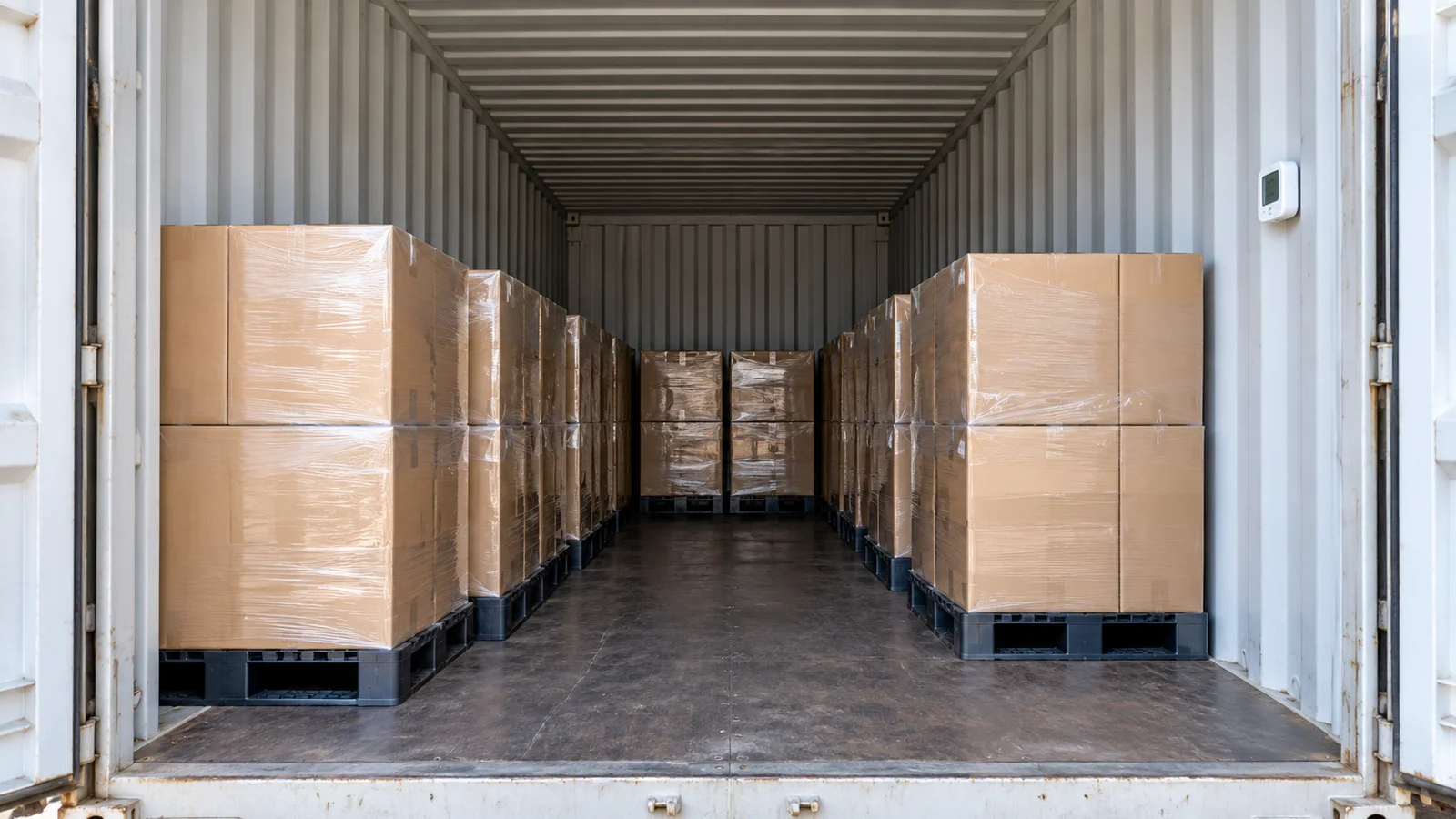
Keep the floor clear enough for inspection and use pallets or appropriate dunnage to raise goods off the container floor. That does not make a container climate controlled, but it helps avoid direct contact with a cold floor, makes minor water signs easier to see, and supports a more orderly layout. Leave sensible access space where the operating plan allows. A tightly packed container may use volume efficiently, but it makes it harder to inspect rear pallets or discover a problem early.
Match the unit to the load size instead of treating the biggest container as the safest option. A 20ft shipping container can be a manageable choice where site access or the load volume is limited. A 40ft shipping container may suit a larger inventory, but it also means more goods to inspect and a longer internal layout to plan. The container-size decision should work with your stock rotation, access needs and delivery route.
Prepare the site before container delivery
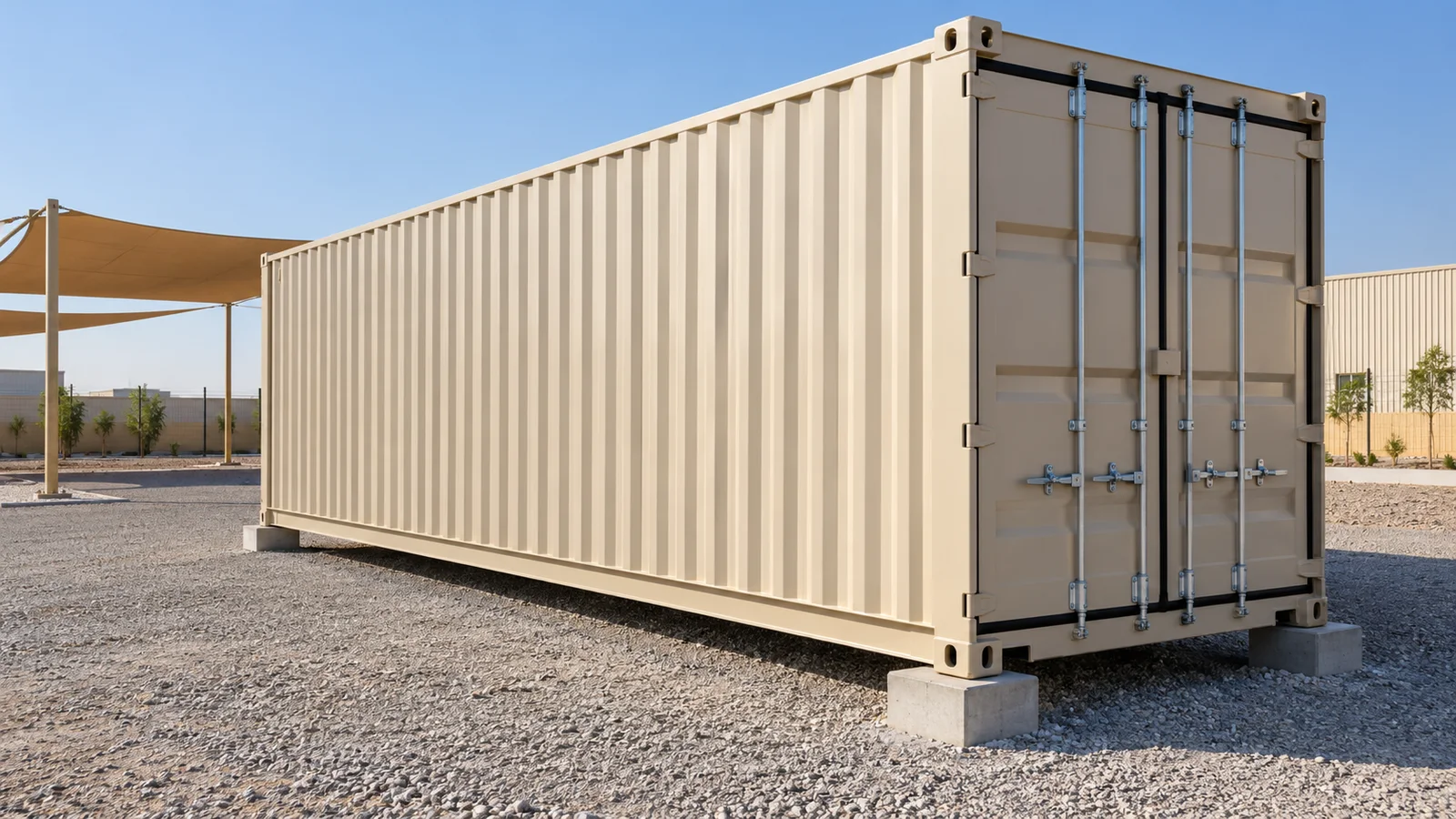
Condensation management does not start at the container door. The ground beneath and around the unit affects access, inspection and drainage. Plan a firm, level base that can support the selected container and its intended load. Where appropriate for the site and installation plan, the container may be positioned so water can drain away from the footprint rather than collecting around the doors or underside. The final support arrangement should be appropriate for the ground conditions and loading; take professional advice where needed.
Think about sun and shade as part of the whole setup, not as a universal cure. Direct sunlight can raise internal temperatures; shade can change how quickly the steel skin cools. A shade structure, roof, orientation or other site treatment needs to suit the product, the container, the site rules and the local conditions. It should not obstruct delivery or create an unsafe access arrangement.
Before ordering, review the practical checks in our shipping container delivery guide for Dubai: vehicle approach, turning room, overhead clearance, lifting space and the final placement point. A container that reaches the site safely and is placed on a prepared base is much easier to manage than one installed in a rushed or inaccessible position.
Ventilation is a decision, not an automatic fix
It is tempting to assume that more ventilation always means less condensation. In a hot, humid climate, that can be too simple. Bringing outside air into a container can also bring in more moisture. Whether ventilation helps depends on the relative temperature and humidity inside and outside, the type of goods, the time of day and the design of any modification.
Do not cut vents, drill the shell or add a roof system as a quick response to damp cartons. Alterations can affect weather protection, security, structural condition, warranties, site approvals and the intended use of the container. If your assessment points to ventilation, insulation, dehumidification or a controlled storage environment, have a qualified specialist recommend a solution for the actual product and site. TAT Containers can help you start with the right container type and delivery planning, but the storage environment should be designed around the goods—not guessed from a photograph online.
Know when a dry shipping container is not enough
A standard dry container is a robust enclosed space. It is not automatically temperature controlled, humidity controlled or suitable for every product. Pharmaceuticals, food, electronics, sensitive paper goods, certain chemicals, high-value finishes and products with a defined temperature or humidity specification may need a different solution and documented monitoring.
Where the issue is product temperature rather than merely keeping rain out, review the difference between a dry unit and a reefer container. A reefer is specialist equipment with its own power, airflow, loading, operating and maintenance requirements; it is not a simple upgrade to an ordinary storage container. For regulated or hazardous materials, consult the relevant authority, insurer, product supplier and site-management requirements before selecting or modifying any container.
Create a routine instead of waiting for visible damage
Condensation issues are easier to manage when they are found early. Set a check frequency that suits the product value, the season, the loading pattern and the length of storage. A simple log can record door-seal condition, unusual odours, roof or wall droplets, damp packaging, standing water around the unit and any changes to the load. If you use humidity or temperature instruments, decide in advance what reading triggers an inspection or escalation; a device only helps when someone reviews it.
Rotate stock where practical. Do not leave a known damp pallet against a container wall because it is inconvenient to reach. If you find recurring moisture, pause before adding several unproven products or making permanent alterations. Recheck the shell, the site drainage, the cargo condition and the pattern of weather or operational changes. Then get product-specific advice if the loss risk is meaningful.
Use the first weeks as a learning period
A newly delivered storage container is a good opportunity to establish a baseline. Inspect it before loading, immediately after loading, and again after a meaningful change in weather or site activity. Take dated photographs of the roof, door seals, floor and representative packaging. This is not paperwork for its own sake: it helps distinguish an issue that was present at delivery from one related to loading, drainage, a modification or the materials brought inside later.
Ask the person who opens the container most often to report small changes early. A musty smell, softened carton edge, damp pallet, unusual roof droplets or a door that no longer closes smoothly is easier to investigate before it becomes a damaged-inventory claim. Keep cleaning materials, product spills and unapproved equipment out of the container unless they are compatible with the goods and the storage plan. The aim is a controlled, repeatable routine—not an assumption that a sealed metal box will solve every moisture risk.
A practical pre-loading checklist
- Confirm the stored goods and the conditions they require.
- Choose an appropriate 20ft, 40ft, new or used unit based on the actual load and condition requirement.
- Inspect roof, doors, gaskets, walls and floor before loading.
- Prepare a stable site with safe delivery access and a drainage plan.
- Load only dry goods, dry pallets and dry packing materials.
- Keep goods raised where appropriate and leave access for inspections.
- Agree a routine for checking the container and the stock.
- Escalate to a specialist if the goods require defined temperature, humidity or compliance controls.
Get a container quote with the right context
A useful quote starts with more than “I need a container.” Tell the team what you plan to store, whether condition or a clean interior is important, whether you are considering 20ft or 40ft, where in the UAE the unit will be delivered, and what access or placement limits exist on site. If you are still comparing options, the shipping containers overview is a good place to start before you contact TAT Containers.
For moisture-sensitive goods, share the storage requirements early. It is better to identify that a dry container is unsuitable, or that a specialist design is needed, before stock has been loaded. Clear information makes it easier to select a unit and delivery approach that fits the project without overstating what a standard container can do.
Frequently Asked Questions
Is condensation inside a shipping container always a leak?
No. A leak and condensation can produce similar signs, but they have different causes. Inspect the roof, walls, floor, doors and gaskets for defects first. If the shell is sound, review humidity, temperature changes and moisture introduced with the load.
Does ventilation always stop container condensation in the UAE?
No. Ventilation can introduce outside air that may also contain moisture. Whether it helps depends on the conditions inside and outside, the goods, and the design of the storage setup. Seek site- and product-specific advice before modifying a container.
Can I store moisture-sensitive goods in a standard dry container?
Only if the product’s storage requirements are compatible with the conditions a dry container can provide. A dry container is not automatically temperature or humidity controlled. Products with defined environmental requirements may need a specialist solution.
When should I consider a reefer container instead?
Consider a reefer when the goods require temperature-controlled storage and you can support its power, airflow, loading, operation and maintenance needs. It is specialist equipment, so confirm the product requirements before choosing it.
What should I include in a container-storage enquiry?
Include the goods to be stored, whether a clean interior or specific condition is important, preferred container size, delivery location, site access, placement plan and any known storage requirements. This helps the supplier discuss an appropriate container and delivery plan.