

A shipping container can look tough enough to ignore, especially once it is in place and doing the quiet work of storing stock, tools, equipment or project materials. In practice, a few simple checks help an owner spot a door problem, a water path or a site-condition issue before it interrupts access or affects what is stored inside. This shipping container maintenance UAE guide is designed for people using a dry container on site, rather than for specialist structural repair work.
The aim is not to turn routine ownership into a complicated technical exercise. It is to build a sensible habit: establish what the unit looks and feels like when it arrives, check the high-use areas regularly, record changes with photos, and bring in a qualified repair professional when a problem involves structure, welding, lifting points or a door that will not operate safely. If you are still choosing a unit, start with TAT’s shipping container options and match the condition to the job.
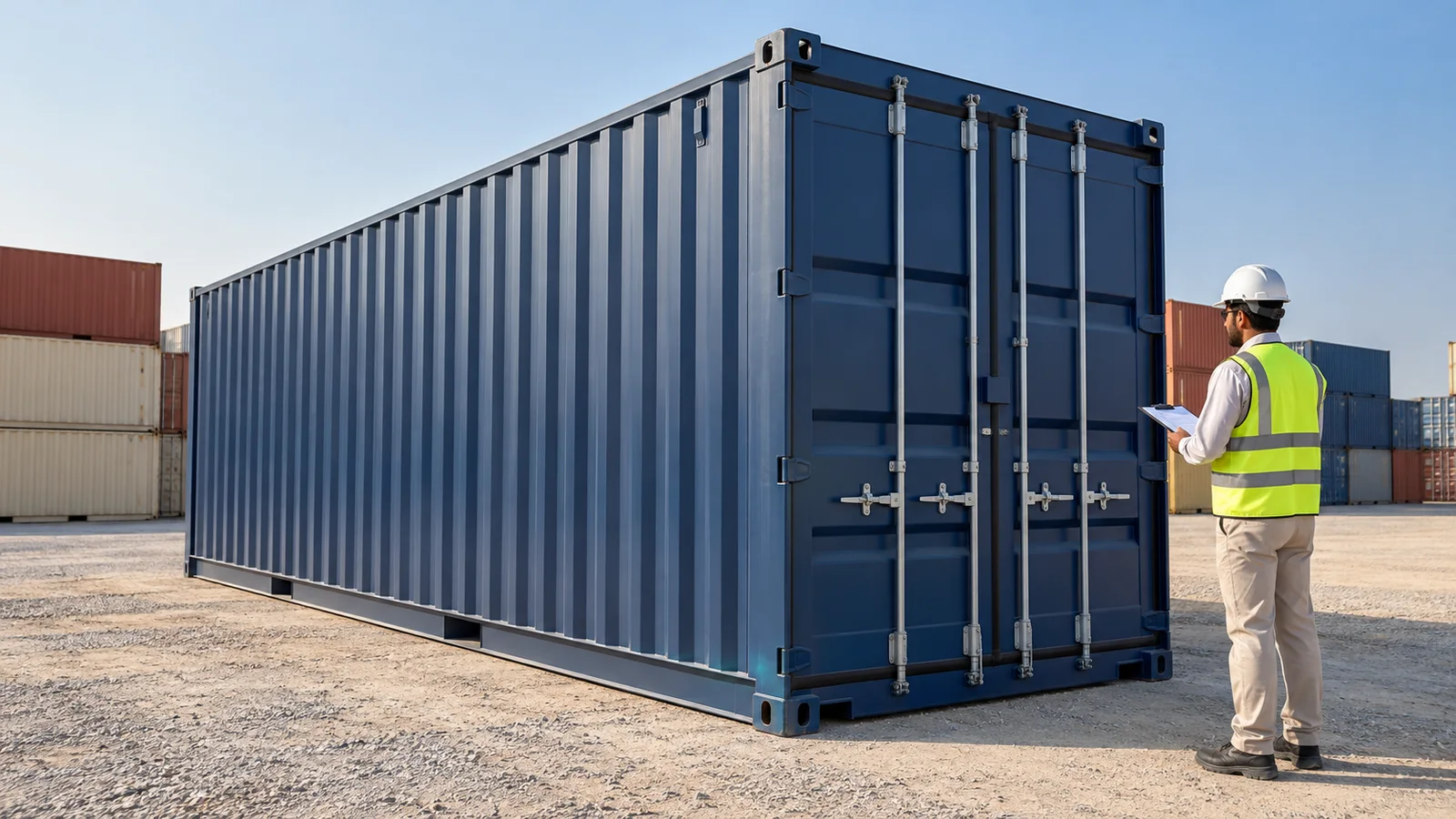
What maintenance means for a storage container
For a container used as ground-level storage, maintenance is mostly observation, housekeeping and timely escalation. It is different from certifying a container for international transport, carrying out a conversion, or repairing significant damage. The International Convention for Safe Containers is relevant to containers in transport; an owner should confirm the requirements that apply to the intended use instead of assuming that a visual check alone creates a transport or compliance approval.
For day-to-day storage, focus on the parts that affect access, weather protection and the condition of stored goods: doors, seals, roof and wall surfaces, the floor, the supporting site and the area immediately around the unit. The right frequency depends on use. A container opened several times a day deserves more attention than one accessed occasionally, and a container that has recently been moved, struck or exposed to an unusual site event should be checked promptly.
Start with a delivered-condition baseline
The most useful maintenance record is created before there is a dispute or fault. On delivery day, take wide photographs of all four sides, both doors, the roof line as seen safely from the ground, the corners, the floor and the unit on its supports. Record the container number if appropriate for your paperwork, the date, the agreed condition and any pre-existing marks noted with the supplier or driver.
Then operate both door leaves while the area is clear. Note whether they swing, align and lock without forcing them. A practical buyer’s walk-around belongs before acceptance too; see TAT’s guide to inspecting a used shipping container in Dubai for the initial condition checks. The maintenance version of that exercise is simpler: compare later observations with the baseline rather than relying on memory.
Keep photos and notes in one place. A phone album named for the site and container is often enough. Photograph a new scrape, water stain, damaged gasket or change in door alignment from the same distance each time. That makes it easier for a qualified person to understand whether an issue is superficial or becoming worse.
Build a routine around use, not a calendar slogan
There is no universal number of days that suits every container. Instead, give someone responsibility for a short check whenever the container is heavily used, after it has been relocated, after a suspected impact, or when the stored goods make moisture or unauthorised access costly. A fuller walk-around can be part of the site’s regular facilities or stock routine.
- Before loading valuable or sensitive goods: check that the interior is dry, the doors close and the floor is clear of loose debris.
- During normal use: notice new resistance at the doors, rubbing at the threshold, torn seal sections, fresh staining or pooling around the footprint.
- After a site change: inspect after relocation, ground works nearby, a vehicle strike, lifting activity or any event that could affect the unit or its supports.
- Before a long storage period: confirm that the load is arranged for inspection, the doors are properly secured and drainage paths around the container remain clear.
A checklist is only valuable if it produces an action. Use three plain outcomes: no change, monitor and document, or arrange qualified assessment. Do not try to force a door, straighten a distorted frame or carry out structural work simply to make a checklist look complete.
Give the doors and seals the closest attention
Doors are the working face of most storage containers. They are also where small changes quickly become inconvenient: a stiff locking bar, a gasket that has pulled away, debris at the sill, or a door that no longer meets the frame evenly. Begin with an unobstructed area and safe footing. Open each door through its normal travel and close it without improvised leverage.
Look for obvious changes around the hinges, locking bars, cams, keepers, handles, door frame and lower threshold. Check the rubber gasket continuously around the closing edge for missing, torn, hardened or displaced sections. The key question is not whether a used container looks factory-new; it is whether the door still closes and seals in the way your stored goods require.

Keep the threshold free from loose packaging, soil and other material that can obstruct closing or hold moisture. If a door suddenly drags, will not latch, has visible frame distortion, or needs excessive force, stop treating it as a lubrication problem. The cause can involve alignment, support conditions or damage that needs an informed inspection. For a newly sourced unit, compare the condition with the description in your used container or new container enquiry.
Read the roof, walls and rails from a safe position
You do not need to climb on a container to notice useful information. Stand back and look along the roof line and side panels from ground level. Note deep dents, an area that appears to hold water, fresh scratches through a coating, open seams, visible holes or corrosion that looks more than superficial. Look at corner posts, rails and the door end as part of the same walk-around.
Surface weathering is not automatically a structural failure, and an old container may show cosmetic wear. What matters is change and location. Perforation, deep scaling, a crack, a seriously bent corner or rail, water entering the interior, or damage near lifting and structural areas is not a do-it-yourself touch-up decision. Record it, keep people clear if there is a safety concern, and ask a competent repair professional to assess it.
For painted surfaces, follow the repair system and safety requirements recommended by the professional doing the work. Avoid masking a leak or covering corrosion without understanding what is beneath it. A clean, dry exterior and clear sightlines make inspection easier; they are not a substitute for a proper repair where steel has been compromised.
Check the interior, floor and stored-goods layout
Every time the container is empty enough to inspect, look at the floor boards, lower wall areas and roof interior. Check for new soft spots, broken boards, exposed fasteners, water marks, daylight through an unwanted opening, odour or residue that does not fit the planned storage use. Do not probe, remove boards or alter treated flooring without understanding the material and safety implications.
How goods are loaded affects how easily the container can be maintained. Leave a route to the doors, keep an inspection line along susceptible wall areas where practical, and avoid packing directly against a visibly damp surface. Pallets or other suitable load supports may help keep goods off the floor, but they do not solve a leak or a poorly suited product-storage plan.
Moisture needs its own diagnosis. Condensation can occur even when a container has no obvious hole, while a water stain can point to a physical entry path. TAT’s shipping container condensation UAE guide explains the difference between dry loading, site setup and moisture-sensitive goods. Treat it as a companion to maintenance, not as a reason to ignore an active leak.
Maintain the site around the container
A container is only as usable as the ground and access around it. The supporting arrangement should keep the unit stable and suitable for its intended placement while allowing site water to move away rather than collecting against the lower frame. Keep vegetation, loose waste, stacked materials and standing water from hiding the perimeter. Clear access also makes it easier to notice changes at the corners, rails and underside without crawling into an unsafe space.
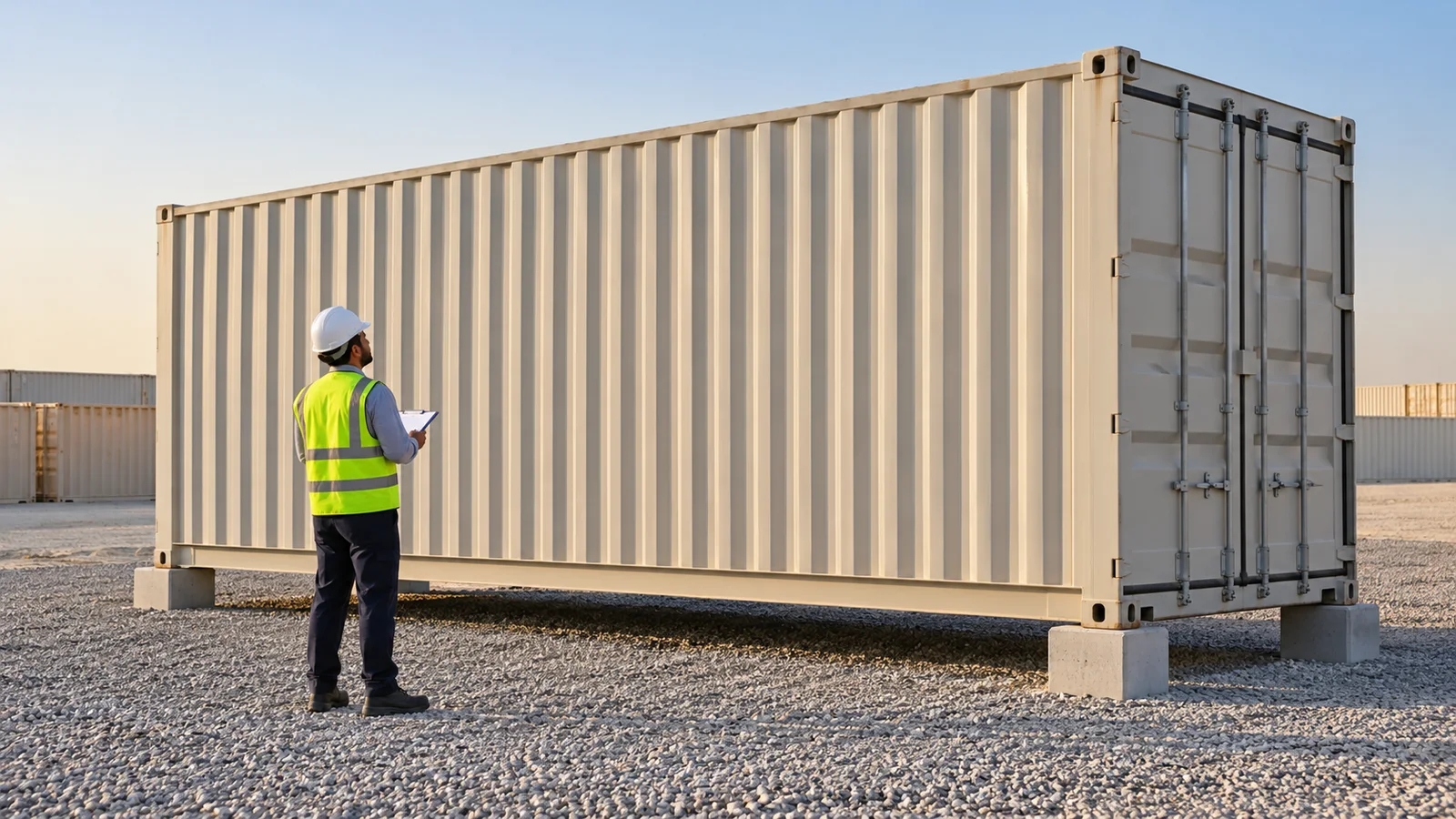
If doors that used to work freely begin to bind after placement, do not assume the hardware alone is at fault. Changes in ground condition or support can be relevant, especially when a unit has been moved or the surrounding site has changed. Revisit the original placement plan and speak to a qualified person before attempting a correction. TAT’s shipping container delivery Dubai guide is useful when reviewing access, lifting space and placement considerations for a future move.
Keep security checks separate from repair decisions
Maintenance and security meet at the door end, but they are not the same job. As part of routine use, check that locking points operate normally and that the access procedure still makes sense for the people using the container. Keep keys, codes and responsibility for opening the unit controlled by the site team. If you use an additional security device, inspect it according to its instructions and make sure it does not lead people to force door hardware.
For a fuller discussion of access control, placement, lighting and practical deterrence, read TAT’s shipping container security Dubai guide. A good security measure does not compensate for a door frame that is damaged or a container that cannot be closed safely.
Know when the container needs a specialist, not a checklist
Routine observation has a clear limit. Arrange professional advice when there is a structural crack, a seriously distorted door frame, lifting-point damage, a hole or suspected leak, heavy corrosion around critical steel, a door that cannot be operated safely, significant floor damage, an electrical issue, or a reefer unit that is not performing as required. Stop loading or using the unit if continuing could create a safety risk.
A dry container and a refrigerated unit also have different operating needs. If product temperature, airflow, power continuity or equipment condition is central to the job, use a reefer-specific plan instead of treating it like ordinary storage. TAT’s reefer container page is the appropriate starting point for a refrigerated-container enquiry.
Make the next container enquiry easier
Maintenance notes help with replacement, expansion and relocation decisions. When requesting a quote, share the size you need, intended use, whether a new or used condition may suit, the delivery area, access details and any concern you identified with the current unit. That gives a supplier a clearer picture than a request for a generic price alone.
TAT Containers can help you begin a container enquiry for Dubai and the UAE. Use the contact page to share the unit type, use case and delivery details, or return to the shipping containers hub to compare the available container categories. For ongoing ownership, keep the same principle: observe early, document clearly and leave consequential repair work to the right specialist.
Frequently Asked Questions
How often should I inspect a shipping container used for storage in the UAE?
Use the container’s use and site conditions to set the routine. Check it before loading valuable or moisture-sensitive goods, notice changes during normal access, and complete a fuller walk-around after a move, suspected impact or other site change. Record unusual findings with dated photos.
What should I do if a shipping container door becomes hard to close?
Clear obstructions at the threshold and stop if the door needs excessive force. Check for visible changes to the gasket, hinges, locking bars, frame and supports, then arrange qualified assessment if the door is misaligned, damaged or unsafe to operate.
Is surface rust always a serious problem on a shipping container?
Not necessarily. Older containers can show cosmetic weathering. Record changes and seek professional advice where corrosion is deep, perforated, close to structural areas, associated with water entry, or combined with damage to rails, corners or doors.
Can poor placement affect container doors?
It can be relevant when door operation changes after placement or relocation. The site, supports and ground condition should be reviewed by a qualified person rather than forcing the hardware or attempting an unplanned correction.
Does a dry shipping container maintenance checklist cover a reefer unit?
No. A reefer container has refrigeration equipment and operational requirements beyond an ordinary dry container. Use a reefer-specific plan and confirm power, product and equipment needs with the appropriate provider.