
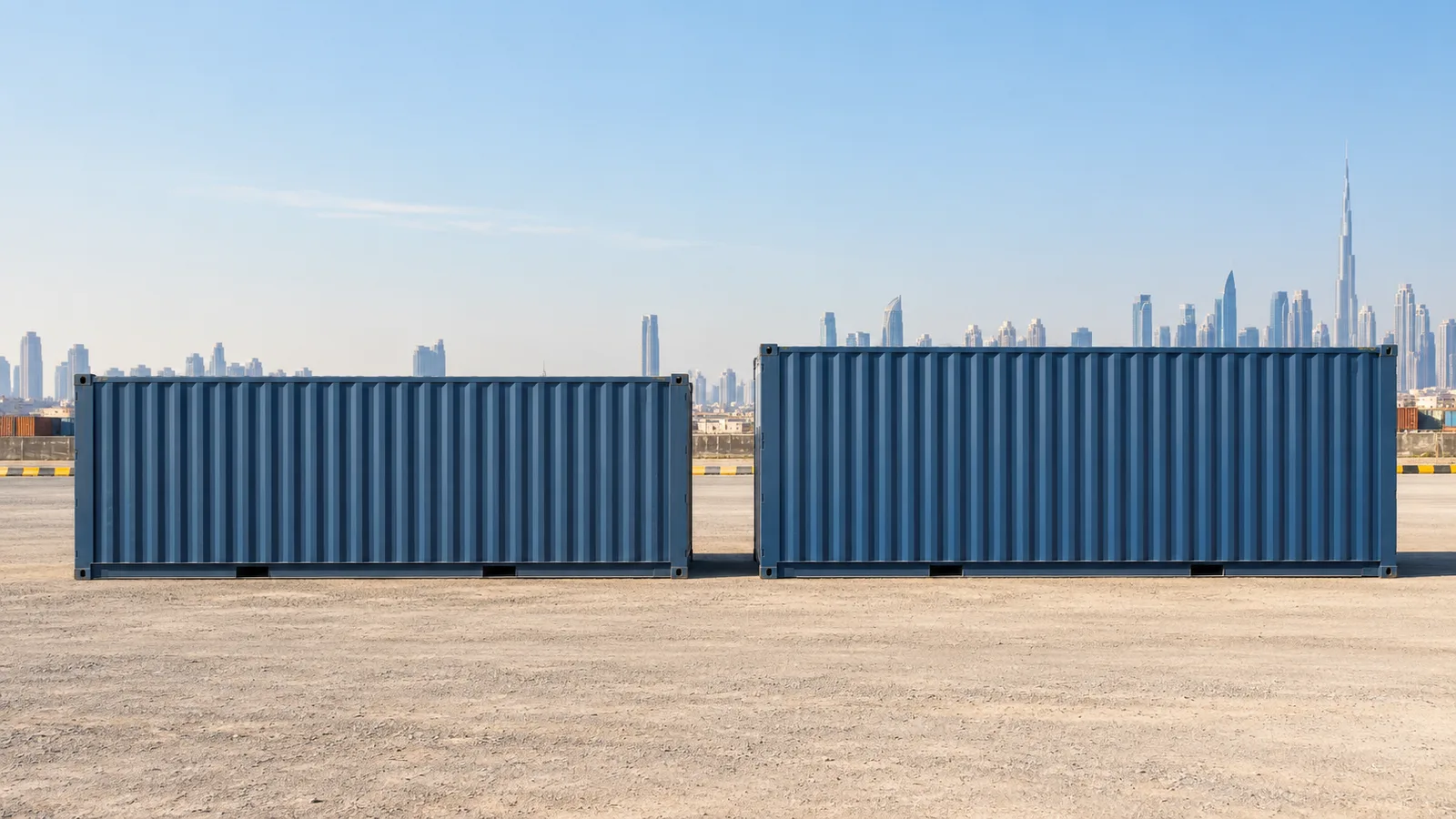

Choosing between a high cube vs standard container Dubai buyers can use confidently is not just a question of whether an extra foot sounds useful. Both 40ft units have the same length and width, but the higher unit changes the available headroom, door opening, overall delivery height and the way a future fit-out may work. For tall, light or racked goods, that space can be valuable. For dense, heavy stock, it may add little.
The sensible starting point is the job, not the label on the container. Measure the goods, sketch the layout, check the delivery route and ask for the specification of the actual unit offered. This guide explains what changes, where the extra height helps and what UAE buyers should confirm before requesting a quote.
High Cube vs Standard Container: The Practical Difference
A standard 40ft dry container is typically about 2.59 m high externally. A 40ft high cube is typically about 2.90 m high externally. The length and width are normally the same: about 12.19 m long and 2.44 m wide outside. In simple terms, the high cube gives approximately 0.30 m of additional height.
That figure needs context. The additional height does not create extra floor area and it does not automatically increase the weight you can carry. It creates more cubic space and a taller door opening. That can be useful for bulky stock, taller shelving, equipment with vertical clearance needs and conversions where ceiling height affects how people use the finished space.
| Typical planning dimension | 40ft standard dry | 40ft high cube dry |
|---|---|---|
| External length | About 12.19 m | About 12.19 m |
| External width | About 2.44 m | About 2.44 m |
| External height | About 2.59 m | About 2.90 m |
| Typical internal height | About 2.39 m | About 2.69 m |
| Typical internal volume | About 67 m³ | About 76 m³ |
| Typical best fit | General storage and standard-height cargo | Light bulky goods, taller racking and headroom-led fit-outs |
These are nominal planning figures, not a substitute for the data plate, survey or supplier specification for a particular container. Build tolerances, condition and modifications can affect usable dimensions. The ISO freight-container standard is a useful reference for the dimensional and rating framework, while the offered unit remains the source to confirm before purchase or transport.

When a Standard 40ft Container Is the Better Choice
A standard-height 40ft container is a strong option when the project needs floor length and secure enclosed storage, but not extra vertical clearance. It can suit boxed stock, spare parts, furniture, equipment, tools, long materials and many warehouse-overflow uses. If pallets, shelving and stock will stay well below the roof, the high cube’s added volume may remain unused.
It can also be the simpler choice where a site has low canopies, gates, overhead cables, covered loading areas or tight vertical clearance on the delivery route. A high cube is not inherently difficult to deliver, but its taller profile means those measurements deserve more attention. A standard unit does not remove the need for an access check; it only gives a little more margin.
Dense cargo creates a separate decision. Metal components, tiles, machinery, liquids and some building materials can approach weight limits before the container is physically full. In that case, extra cubic capacity is not the main constraint. Share estimated total weight and load distribution as well as the goods’ dimensions. A supplier or transport provider can then review whether the container and movement are appropriate.
When a 40ft High Cube Is Worth Considering
A 40ft high cube container earns its place when the project genuinely benefits from more headroom. Common examples include light, bulky inventory; stacked cartons that can be safely stored at a greater height; tall equipment; and container conversions where finished ceiling height matters.
For a storage operation, do not assume that taller is always better. Racking design, load rating, pallet stability, lifting equipment and safe retrieval all matter. A high cube may support a more efficient layout, but it should not become an excuse to stack goods beyond the safe design of the racking, pallet or container floor.
For an office or café conversion, the additional headroom can make room for insulation, ceiling finishes, lighting, HVAC routes and a more comfortable finished interior. The shell alone does not determine whether a conversion is suitable. Electrical supply, cooling, ventilation, doors, windows, approvals, accessibility and the planned occupant load all need their own review. Explore TAT’s office container options or café container planning for the commercial use case rather than treating a dry box as a finished space.
Think in Volume and Access, Not Just Cubic Metres
A high cube has more volume because it is taller, not because it is wider or longer. The footprint remains essentially unchanged. If the bottleneck is the amount of floor space needed for pallets, workbenches or an aisle, the extra height may not solve it. A 40ft standard and a 40ft high cube both require a similar plot length, width and end-door operating space.
Before choosing, draw a simple layout with the real dimensions of your goods. Include:
- Loading method: pallet jack, forklift, hand loading or another handling method.
- Access aisle: space to reach stock without repeatedly shifting items.
- Door use: clearance for the door leaves, loading activity and any ramp.
- Racking and safe working height: the system’s rated capacity and the equipment needed to use it safely.
- Ventilation and moisture control: important for stock affected by heat, humidity or condensation.
The result often makes the answer clearer. A business storing low, dense cartons may gain little from a high cube. A business storing tall but light components, or planning a practical internal fit-out, may find the headroom meaningful every day.
Door Height Can Matter as Much as Interior Height
Buyers sometimes compare roof height and forget the entry point. A high cube usually has a taller door opening than a standard-height 40ft container. That can be useful when equipment, a tall pallet or a racked item must pass through the doors. It still does not mean every tall item will fit: the exact door opening, threshold, packaging dimensions and loading angle should be checked against the offered unit.
For storage, measure the tallest item in its final handling state, not only the product itself. Add the pallet, packaging, forks, lifting attachment or trolley as appropriate. For a conversion, confirm how equipment such as air-conditioning components, counters or finished modules will enter before the interior is closed out.
Dubai Delivery and Placement Checks for a Taller Container
A container that is right for storage still needs to reach the final position safely. The extra height of a high cube is most relevant during road movement and placement. Share the delivery area, entrance measurements and clear photos or video of the route with the supplier before confirmation.
Check gate height and width, turning room, low canopies, pipes, cable routes, trees, site signage and any covered loading bays. The delivery vehicle and lifting method influence the actual clearance required, so a single container height is not enough to approve a route. Site controls, community rules, road permissions and offloading procedures can also vary by location.
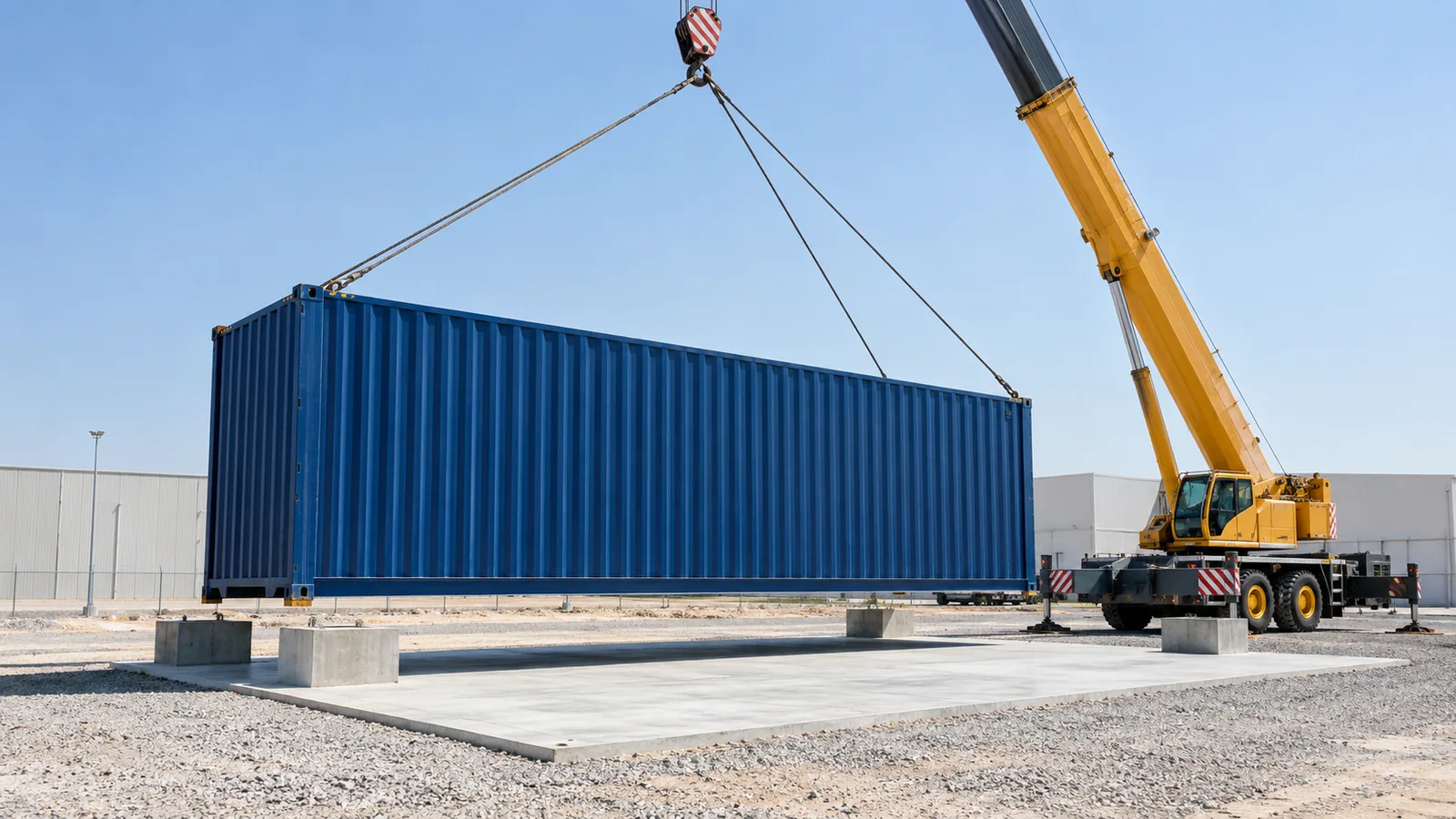
The finished position needs a firm, level base and sensible drainage. Support is commonly planned around the corner castings so the frame remains supported and the doors stay aligned. A level foundation does not eliminate the need for a site-specific plan, especially where the container will be loaded, modified or used for people-based activities. See the shipping container delivery guide for Dubai for the wider access and placement checklist.
High Cube vs Standard for Storage, Cargo and Conversion
General Storage
Choose based on the goods and daily operating pattern. Standard height is often enough for general tools, parts, furniture and inventory that fit a conventional shelf or floor layout. High cube can be valuable for bulky, lightweight stock or a carefully designed higher storage system. Condition matters too; compare the offered unit’s doors, seals, floor, roof, repairs and appearance against the planned use.
Freight and Export Use
For international transport, the cargo dimensions, weight, centre of gravity, route and shipping-line requirements matter more than a generic preference. A storage unit is not automatically suitable for export. Discuss current certification and route requirements with the relevant carrier, freight forwarder and supplier. The high cube’s volume can help with tall or light cargo, but weight limits and cargo securement still govern the load plan.
Office, Retail and Other Fit-Outs
High cube shells are often considered for fit-outs because interior finishes reduce usable headroom. The extra height can create a more workable ceiling zone, but it does not replace engineering, design or approvals. In Dubai, commercial food premises have separate food-establishment requirements; Dubai Municipality provides its food trader and establishment guidance. Confirm the current requirements with the relevant authority and your project professionals before committing to a food outlet layout.
Condition, Availability and Quote Comparisons
Height and condition are separate choices. A used high cube, a one-trip high cube and a standard container may each suit different budgets and uses. Avoid comparing quotes only by the headline container price. Ask what condition is being offered, whether the unit is suitable for the intended use, what delivery and offloading scope is included, and whether modifications, taxes or site responsibilities sit outside the quoted figure.
If appearance, limited prior use or a particular project specification matters, review new and one-trip container options. If practical storage is the priority, ask about suitable used shipping containers and inspect the actual condition criteria. Availability varies, so no guide can substitute for a current quotation.
Questions That Help a Supplier Give a Useful Recommendation
A supplier can respond more accurately when an enquiry explains the operating need rather than simply asking for the “best” container. State whether the unit will remain static or be moved again, whether people will work inside it, and whether the goods are light and bulky or compact and heavy. Include the delivery emirate, the exact site address when available, access photographs, preferred delivery timing and the final position on site.
For a high cube enquiry, call out any low gate, canopy or overhead service early. For either size, explain whether offloading equipment is already arranged or must be part of the delivery scope. If the container will support a conversion, list the intended fit-out separately from the shell requirement. These details reduce assumptions and make it easier to compare like-for-like quotations instead of discovering a route, placement or modification issue after a unit has been selected.
A Simple Decision Checklist
- Measure the tallest, widest and heaviest items in their loading configuration.
- Decide whether the real constraint is floor area, interior height, door height or payload.
- Sketch a working layout with aisles, racking, door operation and retrieval space.
- Measure the delivery route, including vertical restrictions and the final placement area.
- Specify whether the container is for storage, transport, a conversion or another use.
- State the preferred condition, quantity, destination and timing.
- Ask for the offered unit’s exact specification and quote scope before approval.
For a Dubai or UAE project, TAT Containers can review a container enquiry around the size, condition, quantity and drop location. Send the team your project brief with cargo measurements and site access details. That makes it easier to decide whether a standard 40ft or a high cube is the more practical fit.
Frequently Asked Questions
How much taller is a 40ft high cube than a standard 40ft container?
A 40ft high cube is typically about one foot, or roughly 0.30 m, taller externally than a standard-height 40ft container. Typical internal height is about 2.69 m versus about 2.39 m. Confirm the offered unit’s dimensions before ordering.
Does a high cube container have more floor space?
No. Standard and high cube 40ft containers normally have the same length and width. The high cube adds vertical space, not extra floor area, so it helps only when the layout can safely use the additional height.
Is a high cube container better for heavy cargo?
Not necessarily. Dense cargo may reach a weight limit before the extra volume is used. Share the estimated cargo weight, dimensions and loading plan so the appropriate container can be reviewed.
Can a 40ft high cube be delivered to a Dubai site?
It can be considered, but the delivery route, vehicle, lifting method, gate dimensions, overhead obstacles, turning space and final placement area must be checked. The taller container profile makes vertical clearance especially important.
Should I choose standard or high cube for a container office?
High cube can provide useful finished headroom once insulation, ceiling services and lighting are added. The final decision should also account for layout, cooling, utilities, approvals, access and the intended occupancy.