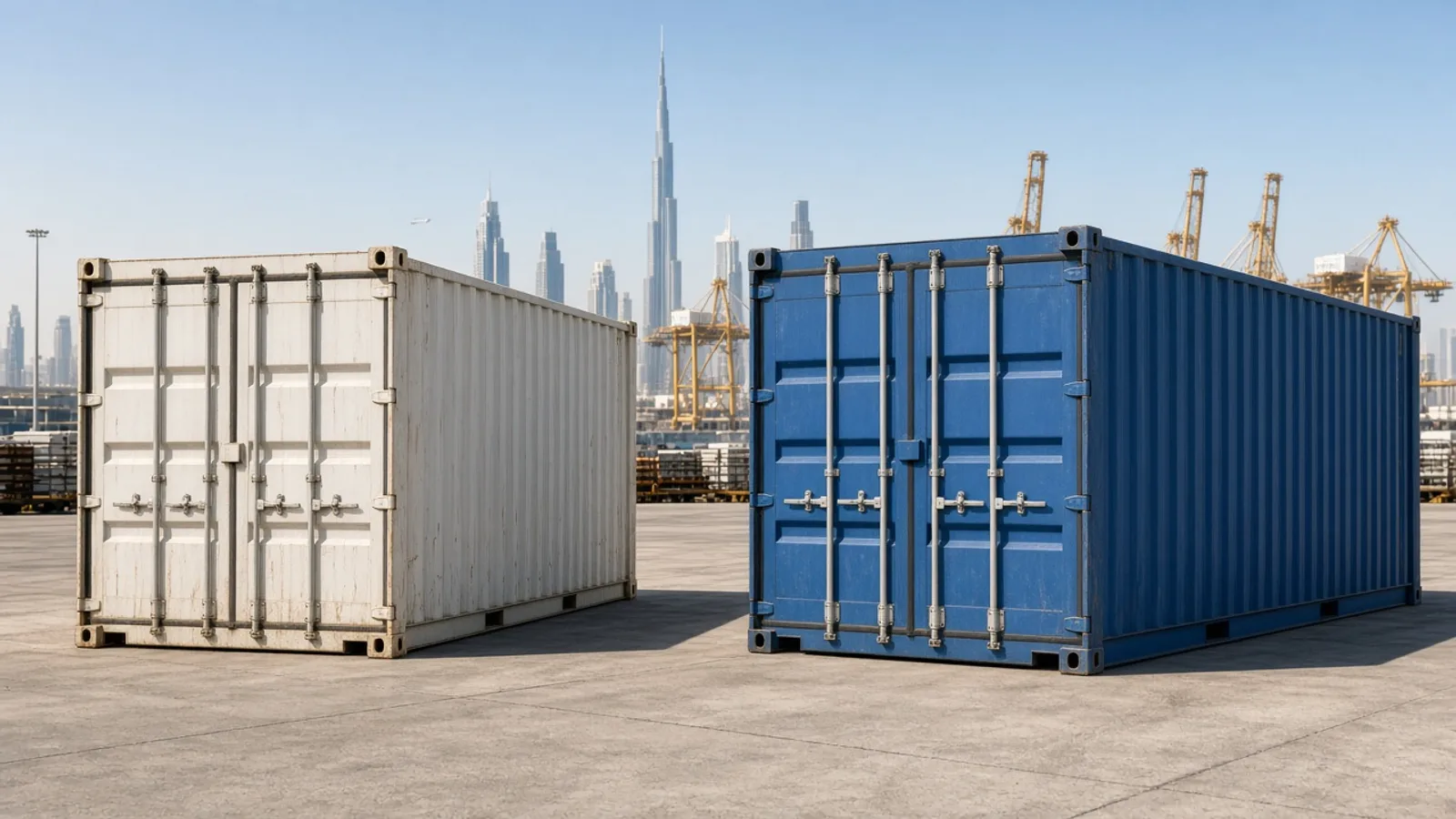

Choosing a 20ft vs 40ft shipping container Dubai buyers can use confidently starts with more than comparing length. Your cargo, site access, handling plan, budget and future use all matter. A 20ft unit can be easier to position on a constrained site, while a 40ft container provides far more floor area without doubling every project cost. The right answer depends on what you need to store, where the container will sit and how it will arrive.
For a 20ft vs 40ft shipping container Dubai requirement, measure the goods and the delivery route before requesting a quotation.
20ft vs 40ft shipping container Dubai dimensions
Standard dry containers follow internationally recognised dimensional conventions, but manufacturing tolerances and modifications can affect exact measurements. Always confirm the specification of the actual unit offered. The typical nominal dimensions below are useful for early planning.
| Type | Approximate external size | Approximate internal length | Typical planning advantage |
|---|---|---|---|
| 20ft standard | 6.06m long, 2.44m wide, 2.59m high | About 5.9m | Compact footprint and easier site positioning |
| 40ft standard | 12.19m long, 2.44m wide, 2.59m high | About 12.0m | More floor area for bulky or long items |
| 40ft high cube | 12.19m long, 2.44m wide, 2.90m high | About 12.0m | Extra internal height for tall cargo or fit-outs |
These figures should not replace a container data plate or supplier specification. ISO publishes standards covering freight container dimensions and ratings through its freight container standards. For project decisions, also consider door opening dimensions, internal width, tare weight and maximum gross weight.
When a 20ft container makes sense
A 20ft container is often a practical choice for tools, spare parts, documents, furniture and general site storage. Its shorter footprint can suit workshops, construction plots, warehouses and yards where turning space is limited. It may also be easier to organise because the distance from the doors to the back wall is shorter.
Dense cargo needs special attention. A 20ft container can reach a transport or structural weight limit before all its internal volume is used. Tiles, metal parts, machinery and liquids can be heavy, so provide estimated cargo weight as well as dimensions. The supplier and transport provider can then assess whether the planned load is suitable.
Choose 20ft when your stock fits with sensible working space, the site has a restricted footprint, or you expect regular access to smaller groups of items. Two separate 20ft units can also create useful stock separation, although they require two placement positions and may change delivery costs.
When a 40ft container is the better fit
A 40ft container offers roughly twice the floor length of a 20ft unit. It works well for bulky but relatively light stock, long materials, furniture, event equipment and larger project inventories. Businesses can create zones for receiving, storage and picking without dividing stock across multiple units.
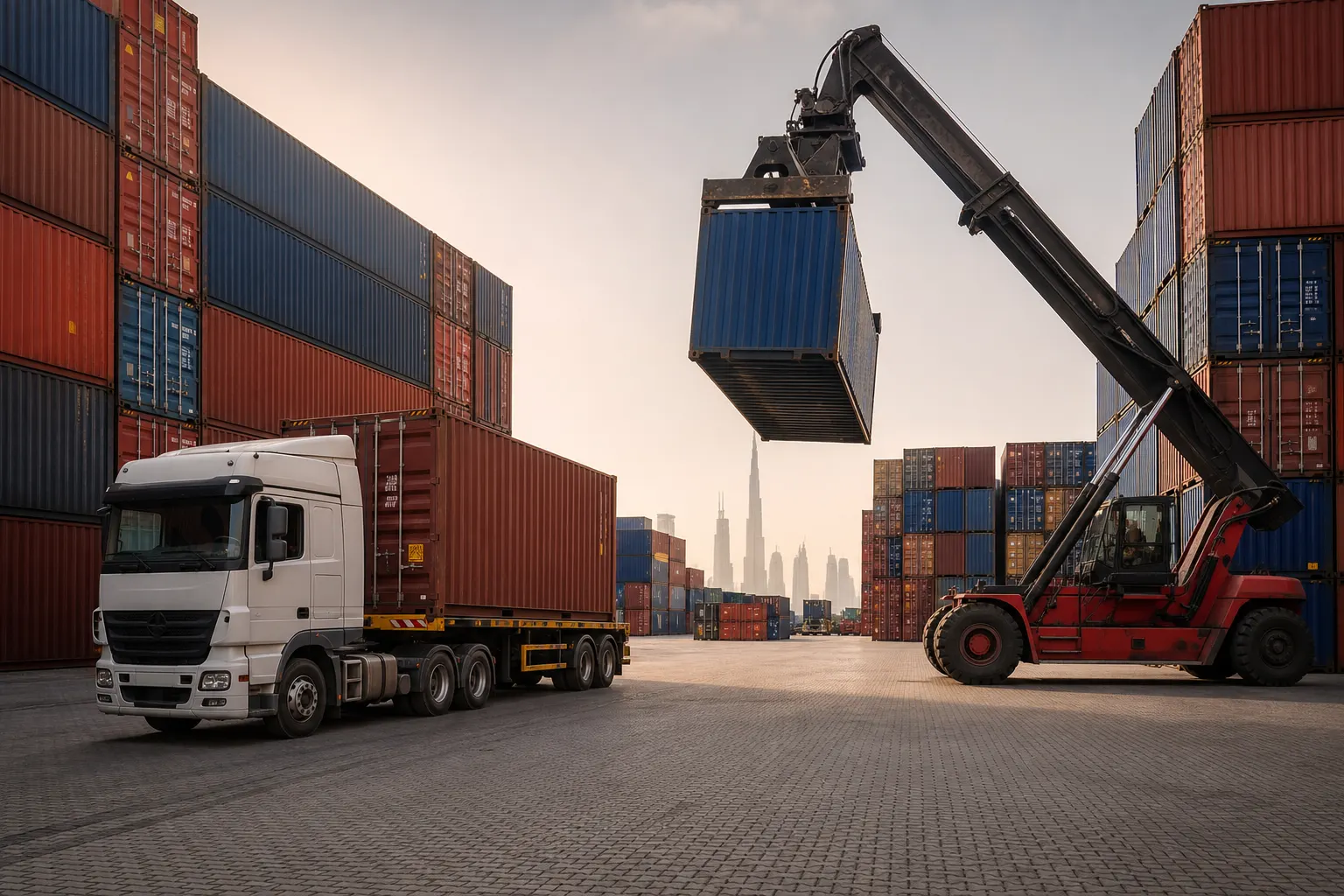
The larger container needs a longer level base and more delivery clearance. The truck must approach safely, and the lifting equipment must place the container without passing over unsafe areas or obstructing roads. A 40ft container can be economical per cubic metre, but only when your site and operating plan can use the extra space.
If height is important, compare standard and high cube containers. The extra height can help with tall goods, racking and conversion services. It also increases the overall transport height, which may affect gates, canopies, cables or indoor access.
Compare usable space, not just external length
Sketch your intended layout to scale. Mark pallets, shelving, equipment, aisles and door swing areas. A container packed to its theoretical capacity may be difficult to operate. If staff need to enter regularly, leave a safe central aisle and enough room to retrieve stock without moving everything in front of it.
- Pallet pattern: Check the pallet dimensions and orientation rather than relying on a generic pallet count.
- Door access: Decide whether end doors are sufficient or whether your operation needs another configuration.
- Ventilation: Discuss vents or moisture control for goods sensitive to heat or condensation.
- Security: Ask about lockboxes, locking arrangements and site lighting.
- Condition: Compare suitable used units with new containers based on appearance, intended service and budget.
Dubai site access and delivery planning
A suitable container can still become the wrong purchase if it cannot be delivered. Record the site address and share clear photographs or video of the entrance, route and final position. Measure gate width and height, road width, turning room, overhead clearance and the distance from the truck position to the placement point.
The base should be firm, level and capable of supporting the loaded container. Support is normally planned around the corner castings so the doors remain aligned. Soft ground or an uneven foundation can lead to settlement and difficult door operation. Keep drainage in mind and avoid locations where water collects.
Dubai sites range from open industrial yards to busy urban plots. Access restrictions, community rules, road permissions and lifting requirements vary. Review the Dubai container delivery guide and discuss site conditions before confirming an order. Information about Jebel Ali and its logistics environment is available from DP World.
Storage, transport and conversion requirements
Tell the supplier how the unit will be used. A static storage container has different priorities from an export unit, a frequently moved container or a conversion project. Export use requires checks relevant to the route, shipping line and current certification requirements. Do not assume every storage container is ready for international transport.
For temperature-controlled products, a dry container is not a substitute for a reefer container. For people-based uses, purpose-planned office containers include considerations such as insulation, cooling, electrical services and safe occupancy.
What to send when requesting a quote
A clear enquiry helps a UAE supplier recommend the right unit and delivery arrangement. Include the preferred size if known, intended use, cargo type and estimated weight, required condition, delivery location, access photos, desired placement and target timing. Mention modifications such as shelving, ventilation, paint or electrical work separately.
If you are comparing options, ask for the offered unit specification and what is included in the quotation. Confirm delivery, offloading, taxes, modifications and any site responsibilities in writing. TAT Containers supplies customers across its UAE service locations. You can contact the team with your measurements and project brief.
Frequently Asked Questions
Is a 40ft container exactly twice the capacity of a 20ft container?
It provides close to twice the internal length and substantially more volume, but usable capacity depends on cargo shape, weight, pallets, racking and access aisles. Plan the actual layout rather than using length alone.
Which size is easier to deliver in Dubai?
A 20ft unit generally needs less placement space, but delivery feasibility depends on the truck, lifting method, road width, turning area and overhead obstacles. A site assessment may still be needed for either size.
Should I choose a 40ft high cube?
Choose high cube when the added internal height has a clear benefit for tall goods, racking or a fit-out. Confirm total transport clearance and the exact unit dimensions before ordering.
Can I use a used container for storage?
Yes, when the unit condition matches the intended storage use. Ask about weather resistance, doors, floor condition, previous repairs and appearance. Export or specialist uses can require additional checks.
What information does the supplier need?
Provide use, cargo dimensions and weight, site location, access measurements, photos, preferred condition, modifications and delivery timing. Better site information reduces the risk of a size or delivery mismatch.