
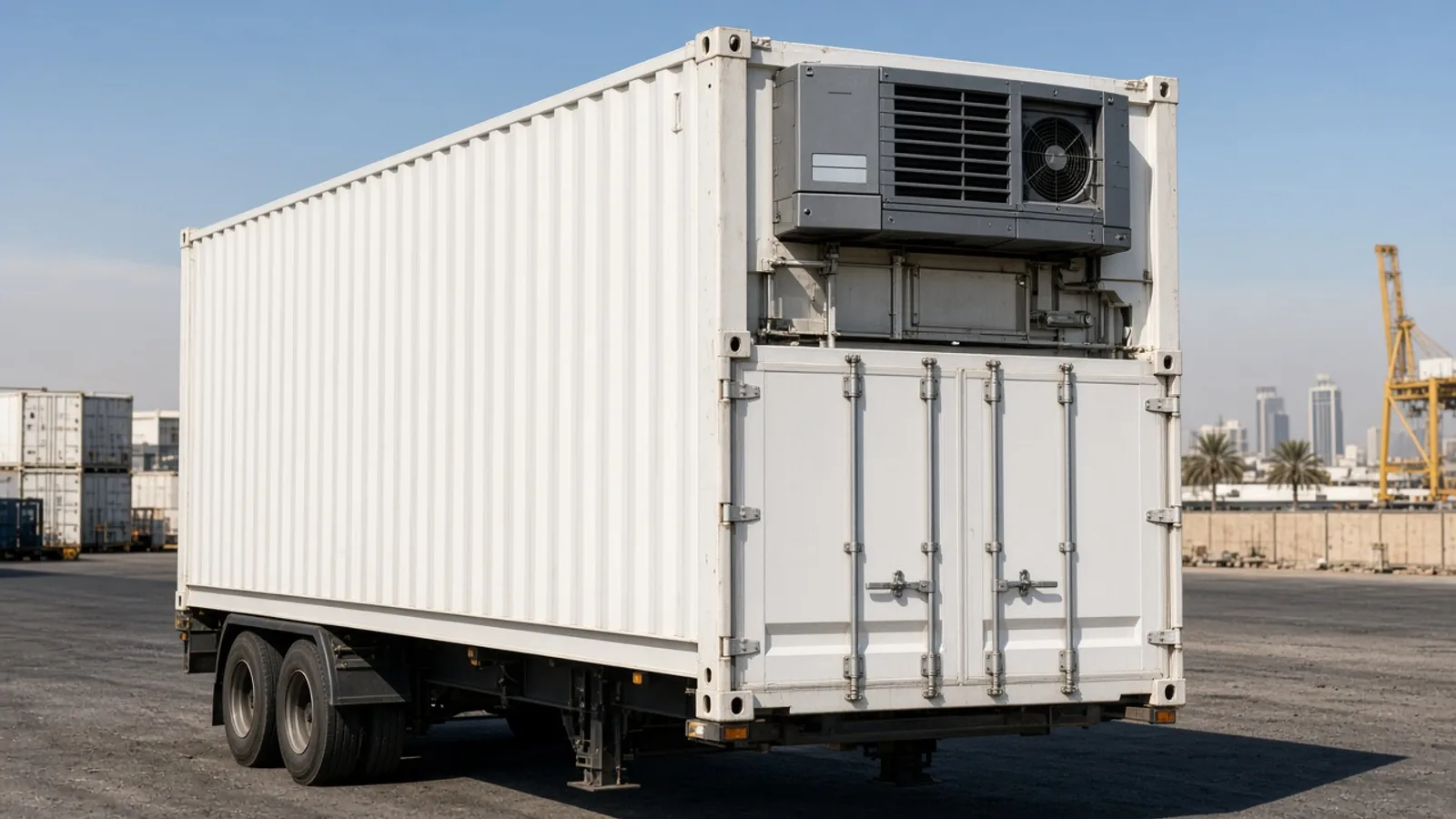

A reefer container Dubai business requirement should begin with the product, temperature range and operating site, not simply the container length. Refrigerated containers are insulated units with integrated machinery designed to maintain controlled conditions when correctly powered, loaded and operated. They can support temporary or planned cold storage, but performance depends on airflow, ambient conditions, maintenance and a suitable electrical supply.
When sourcing a reefer container Dubai unit, share a complete temperature and site brief with the supplier.
How a reefer container works
A reefer circulates conditioned air through the cargo space. The machinery controls air temperature based on its design, set point and operating condition. In many applications, the unit is intended to maintain product that has already reached the required temperature. It should not be treated as a rapid pull-down freezer unless the equipment and operating plan are specifically assessed for that duty.
Air normally travels through the floor and around the load before returning to the refrigeration system. Blocking circulation can create uneven temperatures. Cargo should be loaded according to the equipment instructions, with required clearance around walls, ceiling and marked load lines.
Different products have different needs. Fresh produce may require ventilation and humidity consideration, while frozen goods require stable low-temperature operation. Pharmaceuticals, food ingredients and sensitive materials may require monitoring, validation or procedures beyond basic container operation.
Choosing a reefer container Dubai businesses can operate
Start with the required temperature range, product type, quantity, packaging and loading pattern. Explain whether the container will be used for stationary storage or transport. The supplier can then discuss available reefer container sizes and equipment specifications.
- Temperature: State the operating set point and acceptable tolerance.
- Product condition: Confirm whether goods arrive chilled, frozen or at ambient temperature.
- Door activity: Estimate how often and how long doors will be opened.
- Load pattern: Provide pallet, carton and airflow details.
- Power: Share the available voltage, phase, frequency, protection and connection arrangement.
- Monitoring: Define any logging, alarm or reporting requirement.
Do not assume that every reefer has the same temperature capability, controller or electrical connection. Request the specification for the actual unit offered and have the site supply assessed by a qualified electrical professional.
20ft and 40ft reefer size considerations
A 20ft reefer has a smaller footprint and can suit lower stock volumes or constrained sites. A 40ft high cube reefer provides more storage volume but requires more placement space and a larger clear delivery area. Refrigeration equipment and insulation reduce internal dimensions compared with equivalent dry containers.
Calculate usable capacity from the pallet pattern and required airflow, not from cubic volume alone. Leave operating clearances and a safe path if staff need access. Review the broader guide to shipping container sizes in the UAE, then request reefer-specific internal and door dimensions.
Power supply and electrical planning
Reliable power is central to reefer operation. The supply must match the machinery rating and be installed with appropriate protection, isolation, earthing and cable management. An undersized or incompatible supply can prevent operation or create a safety risk.
Plan the cable route so it is protected from vehicles, water, sharp edges and unauthorised access. Consider what happens during a power interruption. The appropriate backup arrangement depends on the product risk, required temperature continuity and site operating procedure.
Electricity consumption changes with ambient temperature, set point, cargo condition, door opening frequency, equipment efficiency and maintenance. Ask for machine information, but avoid relying on a single generic consumption figure for project budgeting.
Dubai heat, ventilation and placement
Dubai’s hot climate increases the importance of clear condenser airflow and sensible placement. Keep machinery ends unobstructed and follow required service clearances. Avoid positioning the unit where exhaust air is trapped or where dust and debris can accumulate around the equipment.
The container needs a firm, level base with drainage. Door seals and frame alignment rely on stable support. Leave safe access for inspection, cleaning and maintenance. If the unit is near occupied areas, discuss operational noise and site rules.
Share entrance dimensions, road width, turning space, overhead obstacles and final orientation before delivery. The machinery end, cargo doors and power connection must all remain accessible after placement. See the shipping container delivery Dubai guide for site preparation points.
Loading practices that support temperature control
Pre-plan each load so doors remain open for the shortest practical time. Verify product temperature before loading, and do not exceed floor or load line guidance. Packaging should permit the intended airflow. A large warm load can add substantial heat and may not cool as quickly as expected.
Use a documented receiving process for sensitive goods. Check the set point, controller status, cleanliness, door seals and any alarms. Place monitoring probes according to your quality procedure rather than wherever they are easiest to reach. Keep records if required by the product owner or regulator.
Food businesses should consult the relevant UAE and local authority requirements for their activity. The UAE Government portal provides an official starting point for business and regulatory information. Product owners remain responsible for food safety, licences and operational compliance.
Inspection, cleaning and maintenance
Before use, inspect the interior, floor, doors, seals, drains, cables, plugs, controller and machinery condition. Cleaning methods must suit both the product and container materials. If previous cargo history or hygiene certification matters, state this during the enquiry.
Arrange preventive maintenance around operating hours and product risk. Keep the condenser area clear and respond to alarms promptly. Only trained personnel should work on refrigeration and electrical systems. Establish a contact and escalation plan before filling the unit with valuable stock.
Buying or hiring for cold storage
The right commercial arrangement depends on project duration, utilisation, maintenance responsibility and future plans. For short or changing projects, discuss hire availability and service terms. For long-term use, purchase may provide more control, but the owner must plan maintenance and eventual replacement.
Clarify what a quotation includes: container, machinery test information, delivery, offloading, commissioning, accessories, maintenance and taxes. Ask who connects power and who confirms operation after placement. Avoid assuming that transport, electrical work or product validation is included.
What to include in your reefer enquiry
Send the product type, target temperature, acceptable range, stock quantity, packaging, loading frequency, project duration and site location. Include photos, access measurements, available power details and monitoring needs. Mention whether the goods are for food, medical, industrial or another regulated use.
TAT Containers supports projects across its UAE locations. To compare an insulated refrigerated unit with a dry 20ft container or 40ft container, provide the operating brief through the contact page.
Frequently Asked Questions
Can a reefer freeze warm products quickly?
Not necessarily. Many reefers are primarily designed to maintain cargo at its required temperature. Pull-down capability depends on the machine, product, load and conditions, so discuss this duty specifically.
What power does a reefer container need?
Requirements vary by unit. Confirm the machinery data and use a qualified electrical professional to provide the correct voltage, phase, frequency, protection, earthing and connection.
Can I switch off a loaded reefer overnight?
This depends on the product and temperature risk, but temperature can drift when power is removed. Establish a continuity and backup plan based on your goods and operating procedure.
Does a reefer need ventilation around it?
Yes. Refrigeration machinery needs clear airflow and service access. Do not block the machinery end or place it where hot exhaust air is trapped.
Who is responsible for product compliance?
The product owner or operator is responsible for licences, food safety, monitoring and regulatory compliance. The container supplier can provide equipment information, but cannot replace product-specific professional advice.